

Furnace Installation in Ellicott City, MD
Upgrading to a new furnace is a big step for any Ellicott City, MD homeowner, crucial for comfort, safety, and energy savings. Tario HVAC understands that with our cold, damp winters and unpredictable spring and fall, a properly installed furnace means consistent warmth, lower energy bills, and healthier indoor air. We'll walk you through the entire furnace installation journey, covering everything from assessing your home's needs and selecting the right equipment to ductwork adjustments, necessary permits and inspections, our detailed installation process, thorough testing, and personalized homeowner guidance tailored for Ellicott City.
-min.webp)
Furnace Installation in Ellicott City, MD
Replacing or installing a new furnace is one of the most important upgrades you can make for comfort, safety, and energy efficiency in Ellicott City, MD homes. With cold, damp winters and variable spring and fall temperatures, the right furnace and a proper installation process ensure consistent warmth, lower energy bills, and safer indoor air.
Why Ellicott City homeowners replace or install furnaces
Common reasons for new furnace installation in Ellicott City include:
- Age and reliability: Furnaces older than 15 to 20 years often fail more frequently and lose efficiency.
- Rising energy costs: New high-efficiency models can significantly reduce monthly heating bills in Maryland winters.
- Inconsistent heating: Cold rooms or uneven comfort often indicate improper sizing or duct issues.
- Safety concerns: Cracked heat exchangers and incomplete combustion raise carbon monoxide risk.
- Home upgrades: Renovations, adding living space, or switching fuel types (oil to gas, gas to electric heat pump) require new equipment and ductwork adjustments.
Common furnace installation types in Ellicott City
- Standard gas furnace installation (most common where natural gas service is available)
- High-efficiency condensing furnace installation (AFUE 90 percent and up)
- Oil to gas conversions
- Propane furnace installations in areas without natural gas
- Electric furnace or heat pump installations for highly efficient or all-electric homes
- Zoned systems and multi-stage or variable-speed furnace setups for larger or multi-level homes
Home load assessment and proper system sizing
A reliable furnace installation starts with a home heating load assessment. Installers use a Manual J calculation to estimate your home’s actual heat loss based on:
- Square footage and ceiling heights
- Insulation levels in walls, attic, and floors
- Window types and orientation
- Air infiltration and envelope tightness
- Local design temperatures for Ellicott City winters
Correct sizing matters. Oversized furnaces short cycle, waste energy, and reduce comfort. Undersized units struggle to keep up on the coldest days. After Manual J, technicians select equipment capacity that matches your home’s needs and coordinate duct design with Manual D if required.
Equipment selection and options
Choosing the right furnace involves balancing comfort, efficiency, and your home’s fuel availability:
- Efficiency: Look for AFUE ratings and consider condensing furnaces for the best efficiency in Ellicott City’s climate.
- Stages and motors: Single-stage, two-stage, and variable-speed furnaces affect comfort and humidity control; variable-speed blowers provide the best airflow and quieter operation.
- Fuel type: Natural gas is common in suburban Ellicott City; propane or oil systems are alternatives for properties without gas service. Electric heat pumps are an option for all-electric homes or milder heating loads.
- Compatibility: Consider compatibility with thermostats, zoning systems, and existing HVAC components to maintain ductwork and ventilation performance.
Ductwork modifications or upgrades
Ductwork often determines how well a new furnace performs. Typical ductwork services during installation:
- Inspecting duct condition for leaks, disconnected sections, or insufficient sizing
- Sealing and insulating ducts to reduce heat loss in crawl spaces or basements
- Reconfiguring or resizing ducts to match the new furnace airflow requirements
- Adding return runs or transfer grilles to improve circulation and pressure balance
- Installing zoning dampers or separate duct branches for multi-zone control
In older Ellicott City homes, especially historic properties, ducts may be undersized or routed through tight spaces. Upgrades can dramatically improve comfort and energy use.
Permitting and safety inspections
Permits and inspections are a necessary part of furnace installation in Howard County and surrounding jurisdictions. Typical steps include:
- Submitting equipment specifications and scope of work to the local building department
- Obtaining plumbing or gas permits if fuel lines or venting are changed
- Scheduling final inspections to verify combustion safety, venting integrity, and code compliance
- Ensuring carbon monoxide and smoke detectors are present and functioning per local codes
Permitting protects homeowners by ensuring installations meet safety and code requirements for combustion air, venting, and gas connections.
Step-by-step installation workflow
A professional furnace installation generally follows these steps:
- Pre-installation survey and final load calculations on site
- Disconnecting and safely removing the old furnace and associated components
- Preparing the installation location, including pad or bracket, venting, and gas or electrical connections
- Installing the new furnace and connecting fuel, electrical, condensate, and vent systems
- Modifying or upgrading ductwork and mounting thermostats or zoning controls
- Rough inspection if required by the local permit process
- Start-up and system balancing to achieve proper airflow and combustion settings
- Final inspection and certification for compliance with local codes
This workflow minimizes surprises and ensures the system is installed to perform reliably all season.
Post-installation testing and commissioning
After physical installation, technicians perform detailed testing:
- Combustion analysis to confirm safe and efficient burner operation
- Carbon monoxide checks at the furnace and in living spaces
- Static pressure and airflow measurements to validate duct performance
- Temperature rise checks across the heat exchanger to ensure proper heating capacity
- Thermostat calibration and verification of any zoning or communicating controls
Commissioning includes explaining system features and documenting settings for future reference.
Homeowner guidance and maintenance
Proper care preserves performance and safety:
- Change or clean filters regularly—typically every 1 to 3 months depending on filter type and household conditions
- Schedule annual furnace tune-ups before winter to maintain efficiency and detect issues early
- Keep combustion vents, flue piping, and intake openings clear of debris and obstructions
- Monitor for odors, unusual noises, or cycling changes that may indicate a developing problem
- Ensure carbon monoxide alarms are installed on each level and tested regularly
Routine maintenance maximizes service life and reduces the chance of mid-winter failures.
Benefits of professional furnace installation in Ellicott City, MD
- Improved comfort and consistent heat distribution in humid summers and cold winters
- Greater energy efficiency with correctly sized, high-AFUE equipment
- Enhanced safety through proper venting and combustion checks
- Compliance with Howard County and local building codes
- Longer equipment life and reduced call-backs with proper ductwork and commissioning
Q: How long does a typical furnace installation take?
A: Most standard furnace replacements are completed in one to two days, depending on ductwork needs, permits, and any unforeseen complications. Complex conversions or major duct upgrades can take longer.
Q: Do I need a permit for furnace installation in Ellicott City?
A: Yes, furnace installations generally require permits and inspections from the local building department to ensure safety and code compliance. Requirements vary with the scope of work.
Q: What efficiency rating should I choose for Maryland winters?
A: High-efficiency condensing furnaces with AFUE ratings above 90 percent offer the best long-term savings in cold climates. Fuel cost, installation complexity, and your home heating load influence the optimal choice.
Q: Will a new furnace reduce my energy bills immediately?
A: If your existing furnace is old or inefficient, a properly sized high-efficiency furnace combined with sealed and insulated ducts typically lowers monthly heating costs. Actual savings depend on fuel prices and winter severity.
Q: How often should I schedule maintenance for my furnace?
A: Annual professional maintenance before the heating season is recommended, with filter checks every 1 to 3 months. Regular service helps maintain efficiency and detect issues early.

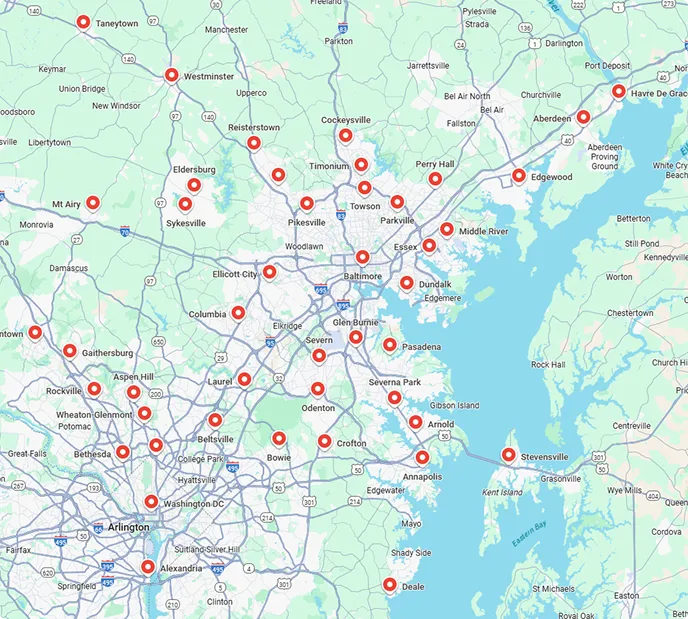
Service areas