



Heat Pump Repair in Essex, MD
Heat pump repair in Essex, MD explains common failure modes, on-site diagnostics, and repair options using OEM parts. The guide outlines typical problems such as loss of heating or cooling, compressor or reversing valve failures, defrost cycle issues, refrigerant leaks, and electrical faults, along with safety and qualification requirements for technicians. It details diagnostic steps, expected timelines, emergency response, and maintenance benefits, and explains scheduling and the customer decision process to ensure reliable, efficient heat pump performance.
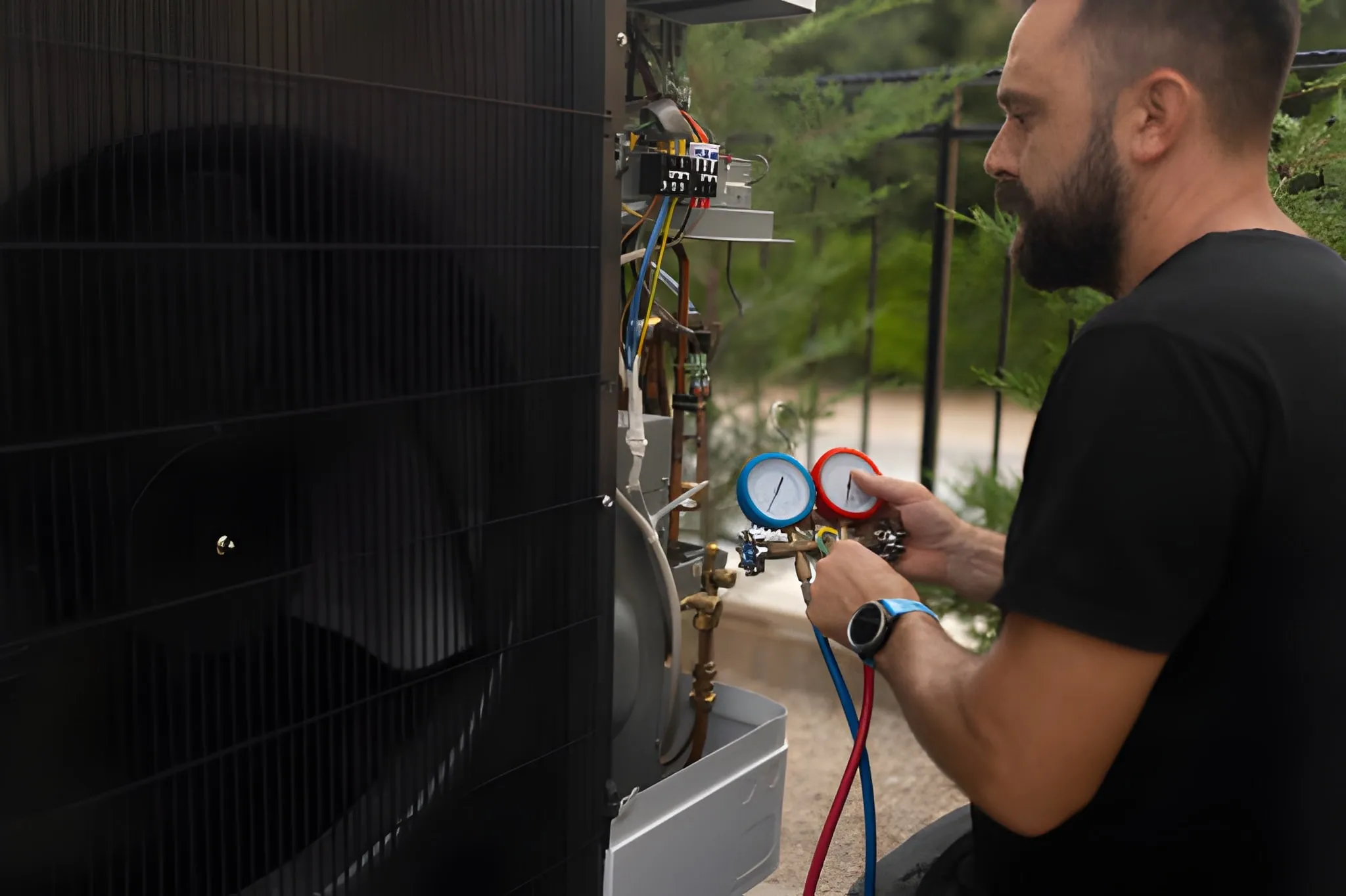
Heat Pump Repair in Essex, MD
Heat pumps are a popular, energy-efficient choice for Essex, MD homes because they provide both heating and cooling with one system. When a heat pump fails or underperforms, it quickly affects comfort and energy bills — especially during humid summers and cold snaps common to the Baltimore metro area.
Common Heat Pump Problems in Essex, MD
- Loss of heating or cooling capacity
- Symptoms: weak airflow, house not reaching set temperature, long run cycles.
- Common causes: failing compressor, low refrigerant from leaks, clogged filters or coils, reversing valve faults.
- Compressor failure
- Symptoms: unit won’t start, loud grinding or humming, circuit breaker trips.
- Causes and notes: compressors wear out over time or fail from electrical stress; replacement is a major repair that requires refrigerant recovery and system evacuation.
- Reversing valve problems
- Symptoms: stuck in heating or cooling mode, system runs but produces wrong temperature.
- Causes and notes: valve can fail electrically or mechanically; diagnosis requires testing valve actuation and refrigerant line pressures.
- Defrost cycle issues
- Symptoms: outdoor unit iced over, reduced heating performance in cold weather.
- Causes and notes: faulty defrost controlboard, sensors, or stuck valves; Maryland winters and frequent temperature swings can trigger defrost problems more often.
- Refrigerant leaks
- Symptoms: reduced cooling/heating capacity, visible oil residue on lines, increased run times.
- Causes and notes: line corrosion, vibration wear, or coil damage; leaks require leak detection, repair, and refrigerant recharge by certified technicians.
- Electrical and control failures
- Symptoms: intermittent operation, thermostat errors, tripped breakers.
- Causes and notes: failed capacitors, contactors, control boards, or loose wiring. Electrical failures can be hazardous and must be handled safely.
On-Site Diagnostic and Troubleshooting Procedures
Technicians follow a structured diagnostic process to identify the root cause before recommending repairs:
Initial safety and visual inspection
- Confirm power and refrigerant system condition, look for corrosion (salt air exposure can accelerate wear in coastal and riverine Essex neighborhoods), oil stains, or mechanical damage.
Electrical and control checks
- Measure voltage and amp draw, test capacitors and contactors, and verify thermostat communication.
Airflow and indoor checks
- Inspect filters, blower motor, ductwork, and coil cleanliness to rule out airflow restrictions that mimic mechanical failure.
Refrigerant and pressure testing
- Check system pressures and temperatures to identify low charge or abnormal operation patterns. Use leak detection methods when pressures indicate loss.
Functional testing
- Run the unit through heating and cooling cycles, observe reversing valve operation and defrost cycle behavior, and record performance data.
Diagnosis and written findings
- Deliver a clear explanation of the issue, recommended repair options (repair vs. replacement), parts needed, and expected timeline for completion.
Repairs, Replacements, and OEM Parts
- OEM parts preference
- Whenever practical, repairs use OEM or manufacturer-equivalent components to preserve system performance and maintain warranties. This includes compressors, reversing valves, capacitors, and control boards.
- Common repairs
- Refrigerant leak repair and recharge (requires EPA certification)
- Compressor replacement (involves recovery, evacuation, and new compressor installation)
- Reversing valve replacement or solenoid repairs
- Defrost control module or sensor replacement
- Electrical repairs: capacitors, contactors, relays, and wiring
- When replacement is recommended
- Technicians will recommend full system replacement when repairs are frequent, compressor failure occurs on older units, or efficiency loss makes repair uneconomical.
Emergency Repair Response
Heat pump failures that leave a home without heat or create safety risks are treated as priority situations. Emergency response typically includes:
- Rapid triage to determine severity and temporary fixes to restore safe operation (e.g., isolating electrical faults, temporary electric heat source recommendations).
- On-site stabilization steps to prevent further damage (securing refrigerant leaks, clearing ice buildup).
- Clear timeframe for full repair or parts procurement when immediate fix is not possible.
Expect professionals to balance speed with safety and proper refrigerant handling during emergencies.
Technician Qualifications and Safety
- Technicians servicing refrigerant systems are certified for refrigerant handling and follow federal and state regulations.
- Expect technicians to be licensed in Maryland for HVAC work, trained on a range of major manufacturers, and to use diagnostic instrumentation (multimeters, manifold gauges, leak detectors, and infrared thermometers).
- Safety protocols include system lockout/tagout for electrical work, refrigerant recovery equipment for environmental compliance, and adherence to local codes.
Typical Repair Timelines
Repair durations vary by diagnosis and parts availability. Typical on-site timeline ranges:
- Initial diagnosis and written estimate: 30 minutes to 2 hours.
- Minor repairs (capacitor, contactor, sensor, thermostat): 1 to 3 hours.
- Refrigerant leak detection and repair: 2 to 6 hours (can extend if hard-to-find leaks exist).
- Reversing valve replacement: 3 to 6 hours, depending on access and system type.
- Compressor replacement: 4 to 8 hours; may require additional time for parts shipping or oil balancing procedures.
- Major system replacement: multiple days, including removal, installation, line evacuation, and performance testing.
Timelines can extend when specialized parts are required or when addressing corrosion and access issues that are common in older Essex installations.
Preventive Maintenance and Benefits of Timely Repair
- Regular maintenance reduces emergency calls and extends system life. Key tasks: seasonal tune-ups, coil cleaning, filter changes, checking refrigerant charge, and verifying defrost operation.
- Timely repairs restore efficiency, lower utility costs, and prevent secondary damage to ductwork or indoor equipment.
- In Essex, MD, addressing moisture-related issues and corrosion early helps avoid accelerated wear from humidity and proximity to the Patapsco River and Chesapeake Bay influences.
How Scheduling and Service Flow Typically Works
While exact scheduling methods vary by provider, the common service flow includes these steps:
- Submit a service request or appointment (online form or scheduler) or request a visit through available booking methods.
- Triage and appointment confirmation with a service window and technician qualifications.
- Technician arrival, on-site diagnosis, and a clear explanation of findings and repair options.
- Agreement on repairs, parts sourcing (OEM parts highlighted), and estimated completion timeline.
- Execution of repairs with post-repair testing and performance documentation.
This structured process ensures transparency, predictable timelines, and repairs done to code with the right parts for lasting performance.
Heat pump issues in Essex, MD range from simple electrical faults to major compressor failures. A methodical diagnostic approach, use of OEM parts, and technicians licensed for refrigerant work ensure repairs are safe and effective. Prioritizing timely repairs and seasonal maintenance improves comfort, efficiency, and equipment lifespan in the local climate.

Service areas
