

Heat Pump Repair in Beltsville, MD
Beltsville, MD homeowners rely on timely heat pump repair to restore comfort, energy efficiency, and indoor air quality. This service page outlines a clear diagnostic workflow—from visual inspections and electrical testing to airflow checks and refrigerant analysis—that identifies root causes quickly. It covers common symptoms, parts replaced, expected timeframes, and pricing, plus guidance on emergencies, warranties, and when to repair versus replace. The result is informed decisions, reduced downtime, and reliable performance across seasons. Trust our local expertise for lasting comfort.
.webp)
Heat Pump Repair in Beltsville, MD
A properly functioning heat pump is essential for year-round comfort in Beltsville, MD. Summers are humid and hot, and winters can bring cold snaps that challenge older systems. If your heat pump is cycling frequently, failing to heat or cool evenly, making new noises, or driving up energy bills, timely professional heat pump repair can restore comfort, protect indoor air quality, and prevent more costly failures down the road.
Common heat pump issues in Beltsville homes
Homeowners in Beltsville typically call for repairs when they notice one or more of these symptoms:
- Reduced heating or cooling capacity and uneven room temperatures
- Frequent short cycling or the system running constantly
- Loud or unusual noises from the outdoor unit or indoor air handler
- Ice buildup on the outdoor coil during winter or repeated defrost cycles
- Higher than normal electric bills with no change in usage
- Thermostat not responding or inaccurate temperature readings
- Tripped breakers, burning smells, or visible refrigerant oil (possible leak)
Humidity and seasonal pollen in the Beltsville area can accelerate coil and filter clogging, while winter fluctuations increase the likelihood of defrost and reversing valve problems. These local conditions influence both diagnosis and preventive maintenance.
Types of repair services and diagnostics
A professional repair visit follows a clear diagnostic workflow designed to identify the root cause efficiently:
- Visual and safety inspection: check panels, wiring, run capacitors, and signs of refrigerant oil or corrosion.
- Electrical testing: verify voltage, amp draw, contactor and relay function, and safety controls.
- Airflow assessment: inspect filters, ductwork, blower motor, and registers for blockages or restrictions.
- Refrigerant check: measure system pressures and temperatures to detect leaks or incorrect charge.
- Defrost and reversing cycle review: monitor defrost control board and reversing valve operation in colder conditions.
- Component testing: evaluate compressor health, fan motors, capacitors, and control boards.
Technicians document findings and recommend emergency or scheduled repair based on the severity and safety risk.
Typical parts replaced during heat pump repair
These are the most commonly replaced components in residential heat pump repairs:
- Capacitors and contactors - common failures that prevent motors from starting
- Fan motor or blower motor - causes poor airflow and reduced efficiency
- Compressor - major component replacement for significant mechanical or electrical failure
- Reversing valve - affects switching between heating and cooling modes
- Defrost control board and sensors - frequent cause of icing issues in winter
- Expansion valve or TXV - influences refrigerant flow and system efficiency
- Refrigerant line repairs and recharge - addressing leaks or undercharge
- Thermostats and control modules - for communication and control problems
Replacement parts depend on make and model, and availability can affect repair timeframes.
Expected timeframes and pricing estimates
Timeframes and costs vary by diagnosis, part availability, and job complexity. Typical ranges for common repairs in Beltsville:
- Minor electrical repairs (capacitor, contactor, thermostat): 1 to 3 hours; estimated cost range $150 to $450.
- Fan or blower motor replacement: 2 to 6 hours; $300 to $800.
- Refrigerant recharge for minor top-up: 1 to 3 hours; $150 to $600 depending on refrigerant type and amount.
- Defrost control or sensor replacement: 1 to 4 hours; $200 to $600.
- Reversing valve replacement or major component swaps: half day to full day; $600 to $1,500.
- Compressor replacement or major system repairs: 1 to 2 days; $900 to $2,500 or more depending on system and labor.
These are ballpark estimates. Older systems using phased-out refrigerants like R-22 will typically incur higher refrigerant-related costs, which can push replacement to be more economical than multiple major repairs.
Emergency vs scheduled repair guidance
- Emergency repair is recommended when you have no heating during cold weather, a persistent refrigerant leak, electrical burning smells, frequent breaker trips, or visible smoke or sparks. These situations pose safety risks or potential for rapid failure.
- Scheduled repair is suitable for noisy systems, reduced performance, odd cycling, or warning codes that do not create immediate danger. Scheduling allows diagnostics and parts ordering to reduce downtime.
Manufacturer warranty considerations
Before authorizing any repair, check your manufacturer warranty and any extended coverage. Important points:
- Some warranties require service by an authorized dealer to remain valid. Unauthorized repairs may void part or full coverage.
- Parts and labor coverage vary; manufacturer warranties commonly cover defects in the compressor or sealed system for a limited period but not wear items like capacitors or fan motors.
- Keep service records and receipts, and register new equipment if required by the manufacturer to preserve warranty rights.
Being proactive about warranty verification can avoid unexpected out-of-pocket costs.
When to repair versus replace
Deciding between repair and replacement depends on age, repair cost, efficiency, and reliability:
- Age rule of thumb: heat pumps older than 10 to 15 years are often better candidates for replacement, especially if repairs are frequent.
- Cost threshold: if a single repair exceeds 40 to 50 percent of the cost to replace the unit, replacement is usually more economical.
- Efficiency and refrigerant type: older units with poor seasonal energy efficiency or using R-22 refrigerant often justify replacement for long-term savings.
- Frequency of repairs: repeated breakdowns or rising energy bills indicate diminished reliability and an overall system that is nearing end of life.
A technician can provide a fair-life estimate including seasonal efficiency losses and projected energy savings from a new system.
Benefits of timely repair and routine maintenance
Prompt repair restores comfort and avoids secondary damage such as frozen coils, melted wiring, or compressor burnout. Regular maintenance in Beltsville helps offset local humidity and pollen effects, preserving efficiency and extending system life. Recommended preventive actions include:
- Annual or biannual tune-ups timed for fall and spring
- Routine filter changes every 1 to 3 months depending on occupancy and air quality
- Keeping outdoor unit clear of debris and vegetation
- Monitoring thermostat performance and ensuring proper setpoints
- Addressing duct leaks and airflow issues to improve system capacity
Timely repair plus proactive maintenance delivers better comfort, lower energy bills, and more predictable long-term costs for Beltsville homeowners.

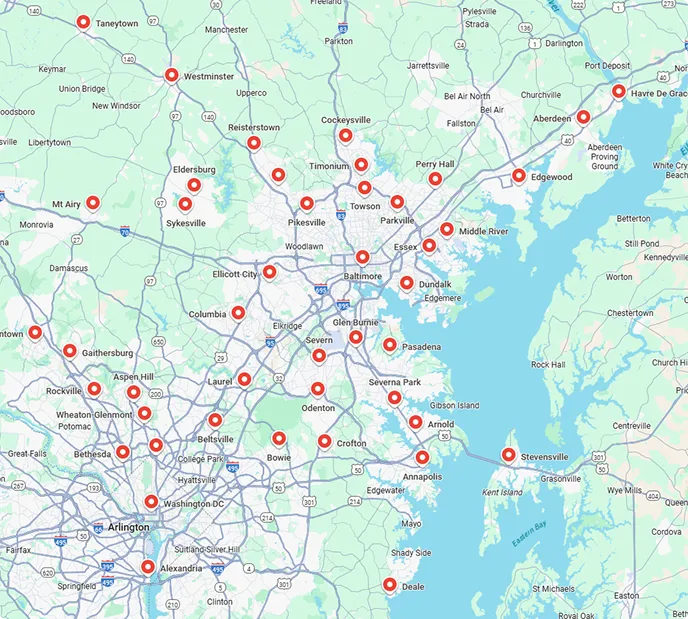
Service areas