

Heat Pump Installation in Owings Mills, MD
Tario HVAC's heat pump installation in Owings Mills, MD begins with a detailed consultation, Manual J load calculations, and system selection tailored to your home. Our technicians assess ductwork, recommend split, packaged, or ductless options, and prepare the site for a smooth install. We handle permitting, inspections, and code-compliant setup—followed by testing, homeowner walkthroughs, and warranty registration. With financing options and maintenance plans available, Owings Mills residents gain long-term comfort, energy savings, and peace of mind through expert planning and precision commissioning.
Heat Pump Installation in Owings Mills, MD
Upgrading to a modern heat pump in Owings Mills, MD delivers year‑round comfort, lower energy bills, and reliable performance through humid summers and cold, occasionally icy winters. This page explains the full new heat pump installation process so you know what to expect: from the initial consultation and load calculation to system selection, permitting, step‑by‑step installation and commissioning, and final performance testing. If your goal is a cost‑effective, efficient heating and cooling solution tailored to local homes, this guide covers the decisions, tradeoffs, and safeguards that matter at the purchase and installation stage.
Why a heat pump makes sense for Owings Mills homes
- Maryland’s climate benefits from heat pumps that both cool and heat efficiently, especially with modern cold‑climate models that extend reliable heating into lower temperatures.
- Many local homes have existing ductwork that can be retrofitted, while townhouses and smaller homes often benefit from ductless mini‑split options to avoid duct loss.
- Heat pumps can reduce winter fuel switching and offer better zoned comfort control for multi‑level houses common in the area.
Common heat pump types and which fits your home
- Split system (air‑to‑air): Indoor air handler with outdoor compressor. Best when existing ductwork is in good condition. Offers high efficiency and straightforward serviceability.
- Packaged system: All components in one outdoor or rooftop unit. Good for homes with limited indoor space or where rooftop placement simplifies installation.
- Ductless mini‑split: Indoor wall/ceiling units pair with one outdoor compressor. Ideal for additions, finished basements, or homes without usable ductwork that need zoned control.
- Cold‑climate heat pumps: Specifically designed compressors and controls to maintain efficiency and capacity at lower Maryland winter temperatures.
Initial consultation and load calculation
- The process begins with an on‑site consultation to assess home size, insulation, window quality, orientation, and existing mechanicals. Inspecting attic and basement conditions is standard.
- A professional Manual J load calculation determines heat loss and cooling load so the system is correctly sized. Oversizing causes short cycling and comfort problems; undersizing leaves the house under‑served on extreme days.
- The assessment also identifies distribution needs: duct repairs, sealing, or replacement; or whether ductless zoning is a better option.
Choosing the right system for your needs
- Selection balances capacity, efficiency (SEER/HSPF ratings), noise, and cost. In Owings Mills, look for units with a proven cold‑weather profile and variable‑speed compressors for quieter, more efficient operation.
- Consider smart thermostat compatibility, refrigerant type (modern R‑410A or low‑GWP alternatives), and manufacturer warranties when comparing models.
- For older homes, evaluate duct condition. Extensive duct leakage or poor insulation often tips the scale toward ductless systems or a combined approach (ducted main zones plus mini‑splits for problem rooms).
Site preparation before installation
- Clear and level the outdoor equipment pad area. Ensure adequate airflow clearance from walls, fences, and landscaping to meet manufacturer specs.
- Inside, create sufficient service access for indoor units and provide clear electrical panel access. Prepare any refrigerant or condensate drainage pathways.
- If duct modifications are required, schedule those preparatory repairs: sealing, adding insulation, or reconfiguring runs for balanced airflow.
Step‑by‑step installation and commissioning
- Pre‑installation checklist: Confirm permit status, equipment arrival, mounting locations, and electrical service capacity.
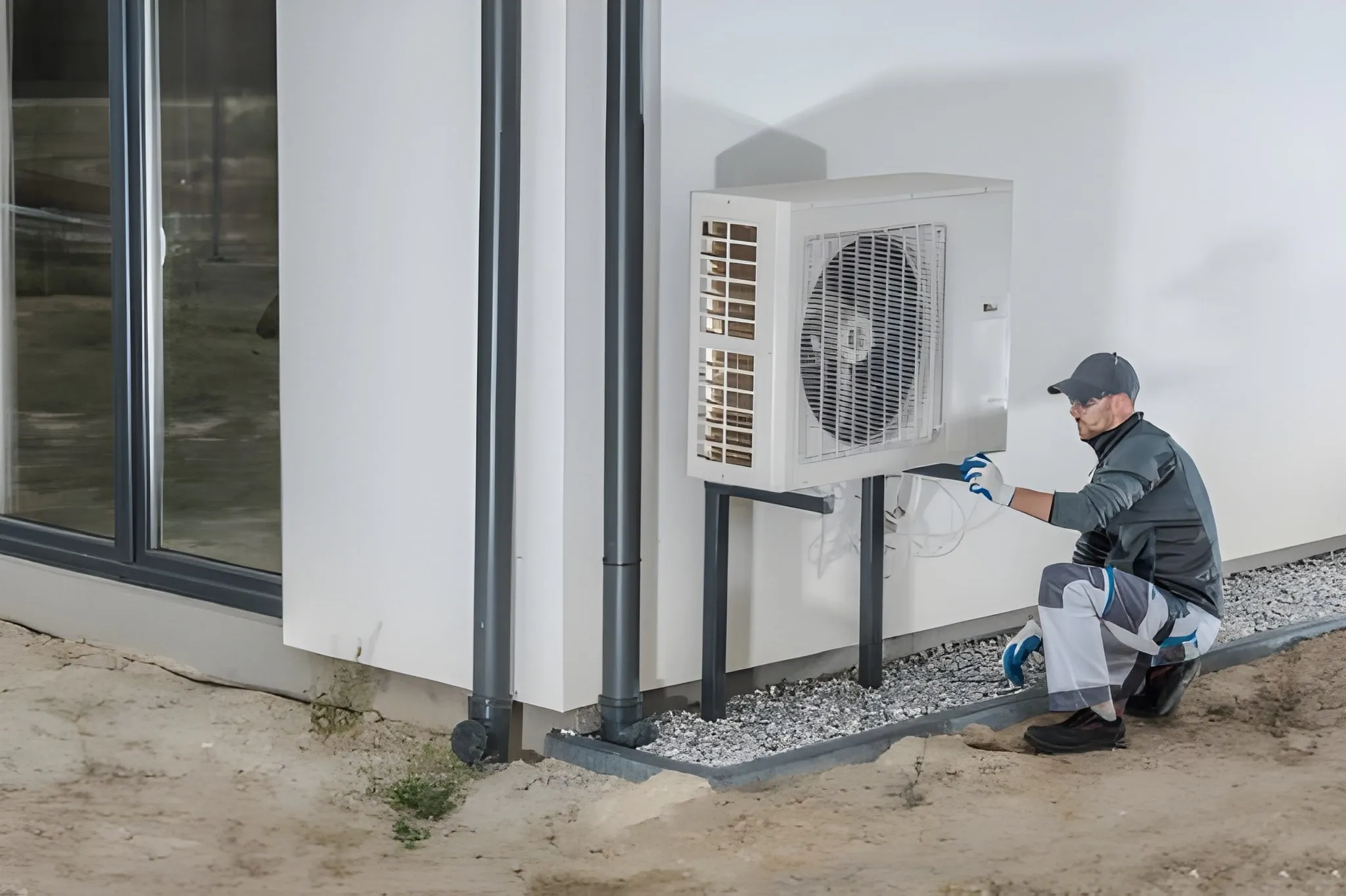
- Mount outdoor unit: Set on a concrete pad or anti‑vibration mounts; secure per code and manufacturer instructions.
- Install indoor equipment: Place air handler in attic, closet, or basement, or mount mini‑split heads on interior walls. Route refrigerant lines, condensate lines, and wiring.
- Connect electrical: Properly sized breakers and disconnects are installed. A licensed electrician verifies circuit protection and bonding.
- Evacuate and charge refrigerant: Technicians pull vacuum to remove moisture, then charge refrigerant to the specified level for optimal performance.
- System start and control setup: Configure thermostats or controls, pairing wireless components when applicable.
- Commissioning: Run the system in heating and cooling modes to stabilize operating conditions and confirm control sequences.
Permitting, inspections, and code compliance
- New installations in Owings Mills require local building permits and inspections through Baltimore County permitting offices. Permits ensure equipment sizing, ductwork, electrical, and refrigerant handling meet code and safety standards.
- Installations must follow Maryland energy code requirements and manufacturer installation guidelines to preserve warranty coverage and system efficiency.
- Licensed HVAC technicians document work for inspections and provide required trade permits and certificates as part of compliance.
Performance testing and verification
- Professional testing includes airflow measurement, static pressure checks, refrigerant charge verification, and electrical load assessment.
- Verify defrost cycle behavior for cold weather, compressor amperage, and proper thermostat calibration. Confirm condensate removal works reliably and overflow protections are in place.
- Efficiency and comfort results are tracked against expected SEER/HSPF performance metrics and the Manual J sizing assumptions.
Post‑installation walkthrough and homeowner education
- After commissioning, the installer conducts a walkthrough to demonstrate system operation, thermostat programming, filter replacement, and basic troubleshooting.
- Discuss seasonal expectations: when auxiliary heat might engage, optimal thermostat setbacks, and tips for reducing humidity in summer.
- Provide documentation on warranties, model and serial numbers, maintenance schedules, and any permits or inspection paperwork.
Warranties, maintenance, and financing options
- New heat pumps typically include manufacturer warranties on compressors and parts; extended labor warranties may also be available. Retain installation paperwork to preserve coverage.
- Regular maintenance—annual tune‑ups before summer and winter—keeps efficiency high and extends equipment life. Maintenance plans often include priority service and seasonal checks.
- Financing solutions are commonly available through lenders to spread installation costs; terms vary by provider and may include promotional options.
Benefits of timely, professional installation
- Properly sized and installed heat pumps reduce energy consumption, improve indoor comfort, and avoid common problems like short cycling, humidity issues, and premature component failure.
- For Owings Mills homeowners, a correctly commissioned system balances performance across humid summers and colder winters, delivering predictable comfort and lower utility bills.
- Investing in quality installation, permitting compliance, and regular maintenance protects warranty rights and maximizes the system’s operating lifespan.
Careful planning, accurate load calculations, and code‑compliant installation are the difference between an efficient, long‑lasting heat pump and ongoing comfort problems. Choosing the right system type and ensuring professional commissioning will deliver the dependable heating and cooling performance Owings Mills homes need.

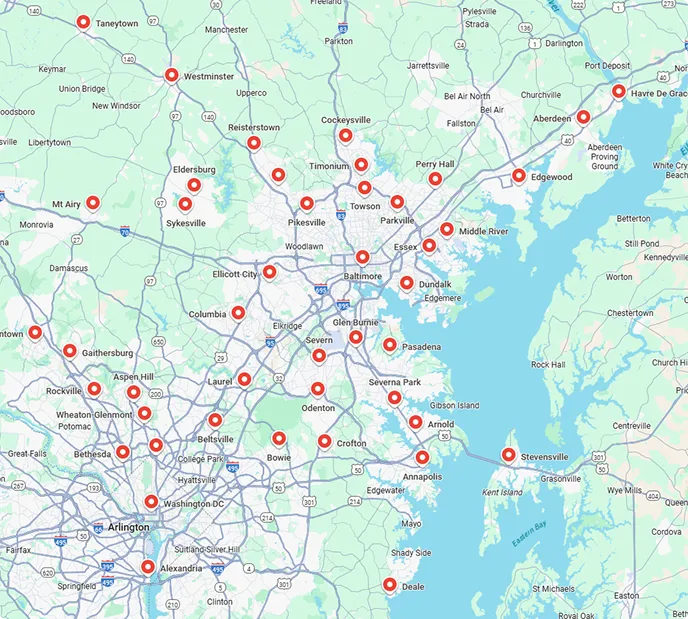
Service areas