

Tankless Water Heater Installation in Mount Airy, MD
Upgrading to a tankless (on-demand) water heater in Mount Airy, MD brings consistent hot water, lower standby energy loss, and a smaller footprint that fits well in older and newer homes alike. For Mount Airy residents, local climate swings between hot, humid summers and cold winters increase demand for reliable hot water throughout the year. Discover the benefits of a tankless system, understand how sizing and load calculations work, and learn about fuel and electrical requirements. Tario HVAC handles professional installation steps including permits and venting, and we'll discuss expected energy savings, warranty and maintenance options, financing and rebate considerations, and a realistic project timeline tailored to Mount Airy properties.
.webp)
Why Choose Tankless in Mount Airy, MD
- Continuous hot water on demand eliminates run-out during peak showers or appliance use.
- Reduced energy loss because there is no storage tank losing heat overnight.
- Compact units free up basement or garage space common in Mount Airy homes.
- Longer service life than typical tank models when maintained properly, which fits well for homeowners planning long term.
- Fits well with energy-efficiency goals and can integrate with high-efficiency boilers or heat pump systems in some homes.
Common tankless water heater types and common issues in Mount Airy homes
- Fuel types: natural gas, propane, and electric tankless units. Natural gas or propane is common in many Mount Airy neighborhoods; some homes rely on electric service.
- Common issues: insufficient flow rate during peak demand, inadequate gas supply or undersized gas line, improper venting or condensate drainage, hard water scale buildup that reduces performance, and electrical service limits on electric units.
- Older homes in Mount Airy may need service panel upgrades or gas line upsizing to support modern on-demand units.
Sizing and load calculations
Sizing a tankless unit is about matching peak hot water demand and the temperature rise required. Professionals use two key numbers:
- Flow rate in gallons per minute (GPM): add the peak simultaneous fixtures likely to run (for example two showers plus a dishwasher). Typical shower flows are 1.5 to 2.5 GPM.
- Temperature rise: difference between incoming ground water temperature and desired output (for Mount Airy winter groundwater temperatures can be lower, increasing required temperature rise).
A technician calculates required GPM x temperature rise and selects a unit with rated output that meets or exceeds that demand. Oversizing slightly for future needs in Mount Airy homes is common practice to avoid performance shortfalls.
Fuel and electrical requirements
- Gas or propane units require adequate gas meter capacity and properly sized, code-compliant gas piping. Many older Mount Airy homes need a gas line upgrade to reach the required BTU input of a tankless unit.
- Electric units require dedicated circuits and sufficient service capacity. Homes with older 100 amp panels may need electrical service upgrades to install high-capacity electric tankless systems.
- Venting options vary: direct vent, power vent, or sealed combustion. Condensing gas units require condensate management and corrosion resistant venting materials. Placement planning is essential when considering clearances and exterior terminations.
Professional installation steps
A professional installation ensures safety, code compliance, and peak performance. Typical steps include:
- Site assessment and load calculation - review water use patterns, incoming water temperature, and available fuel or electrical supply.
- Selection of the right unit - choose capacity, fuel type, and venting method based on findings.
- Permit acquisition - pull required permits with local jurisdiction. Mount Airy properties may fall under Carroll, Frederick, or Montgomery county codes depending on exact location, and each jurisdiction has specific permit and inspection requirements.
- Gas or electrical upgrades - perform any needed gas line upsizing, meter upgrades, or electrical panel and wiring work.
- Venting and termination - install proper vent materials and termination points to code. For condensing units install drain and neutralization as required.
- Unit installation and connection - mount the unit, connect water, gas, and electrical lines per manufacturer instructions.
- Commissioning and testing - flush system, check for leaks, program controls, and verify performance at peak flow.
- Final inspection and paperwork - complete any required municipal inspections and provide owner with operation and maintenance guidance.
Expected energy savings
Tankless water heaters eliminate tank standby losses and can reduce water heating energy use by 20 to 35 percent for households with moderate hot water demand. Savings depend on:
- Fuel costs in your area and whether you switch from electric storage to gas on-demand, or vice versa.
- Household usage patterns: homes with frequent short draws benefit more from on-demand performance.
- Proper sizing and maintenance to prevent scale or efficiency loss. For Mount Airy homeowners, seasonal temperature swings can influence efficiency; professional sizing that accounts for winter groundwater temperature maximizes savings year round.
Warranty and maintenance plans
- Manufacturer warranties commonly cover the heat exchanger and parts for a specified period; typical ranges vary by model and brand. Extended warranties and labor coverage are available from some providers.
- Maintenance is essential for longevity: annual descaling or flush service in areas with hard water, filter cleaning, vent inspection, and gas pressure checks. Mount Airy homes with higher mineral content in water will benefit from a scheduled scale management plan.
- A professional maintenance plan typically includes annual inspection, descaling as needed, and priority scheduling for service calls.
Financing and rebate information
- Financing options from lenders or home improvement programs can spread installation costs over time. Many homeowners choose financing for larger gas or electrical upgrade work that accompanies the installation.
- Rebate and incentive programs change periodically. Maryland state energy programs, local utilities, and federal tax incentive programs may offer rebates or credits for high-efficiency equipment. Homeowners in Mount Airy should confirm current incentives and eligibility based on fuel type and system efficiency.
Project timeline
- Simple swap where unit replaces an existing tankless or tank with compatible utilities: commonly completed in 1 day to 2 days.
- Installations that require gas meter increases, major gas line work, electrical service upgrades, or extensive venting changes: typically 1 to 3 weeks including permitting and inspections.
- Complex jobs with structural modifications or multi-family systems may take longer; realistic scheduling accounts for permit turnaround from the applicable county office.
Frequently Asked Questions
Q: How do I know if my Mount Airy home needs a gas line or electrical upgrade for tankless installation?
A: A professional assessment includes gas meter capacity and service panel evaluation. If your current gas piping or electrical service cannot support the unit input requirements, an upgrade is recommended and will be specified in the installation plan.
Q: Will a tankless unit provide hot water for two showers at once?
A: Properly sized tankless units can handle simultaneous showers. The installer calculates combined flow rates and temperature rise to select a unit rated to meet your peak demand.
Q: How often does a tankless require maintenance in Mount Airy?
A: Annual inspections and descaling are common recommendations. If your water has high mineral content, more frequent descaling may be necessary to maintain efficiency.
Q: Are there local rebates in Mount Airy for switching to tankless?
A: Incentive availability varies. Maryland state programs and local utilities may offer rebates for high-efficiency models. Check current program details for eligibility and application requirements.
Q: What should I expect for venting if I install a gas tankless unit?
A: Venting options depend on the model. Non-condensing units require high-temperature venting, while condensing units use corrosion-resistant venting and require a condensate drain. Placement and clearance requirements will be determined during the site assessment.

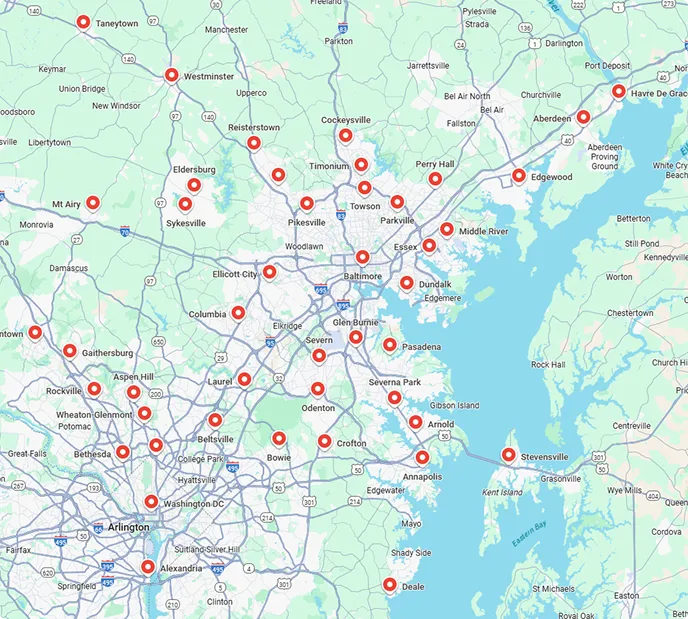
Service areas