

Furnace Repair in Pasadena, MD
When a furnace fails in Pasadena, MD, it creates more than discomfort — it can create safety and health risks during cold snaps. Pasadena homes near the Chesapeake often face damp, chilly winters and occasional coastal corrosion that can accelerate wear on heating equipment. Whether you need an immediate fix or a planned service, understanding common furnace problems, the diagnostic approach Tario HVAC technicians use, and when repair makes sense versus replacement will help you make an informed decision for your home.
Furnace Repair in Pasadena, MD
When a furnace fails in Pasadena, MD, it creates more than discomfort — it can create safety and health risks during cold snaps. Pasadena homes near the Chesapeake often face damp, chilly winters and occasional coastal corrosion that can accelerate wear on heating equipment. Whether you need an immediate fix or a planned service, understanding common furnace problems, the diagnostic approach technicians use, and when repair makes sense versus replacement will help you make an informed decision for your home.
Common furnace failure modes in Pasadena homes
- Ignition problems: Electronic igniters and pilots wear out or fail. Symptoms include short cycling, repeated attempts to light, or a furnace that won’t start.
- Faulty thermostats or control issues: Miscalibrated or failing thermostats, loose wiring, or a defective control board can prevent the system from responding to temperature settings.
- Airflow restrictions: Clogged filters, blocked vents, collapsed or leaking ducts, and dirty blower wheels reduce airflow, causing overheating, short cycling, or uneven heating.
- Motor and blower failures: Worn bearings, failing capacitors, or belt deterioration lead to noisy operation or complete blower stoppage.
- Heat exchanger concerns: Cracks or corrosion in the heat exchanger can cause carbon monoxide risk and often change the repair/replacement calculus.
- Fuel supply and safety devices: Gas valve failures, pressure issues, or safety switches (limit switches, flame sensors) that trip intermittently will interrupt operation.
- Moisture and corrosion effects: Coastal humidity and salt air can accelerate corrosion on outdoor vents, flues, or condensing system components.
Emergency vs scheduled furnace repairs
Emergencies in Pasadena include loss of heat during freezing conditions, persistent carbon monoxide alarm activation, a strong smell of gas, visible flames outside the combustion chamber, or smoke. In urgent cases, technicians prioritize safety checks and immediate measures to eliminate hazards.
Typical response timing used by technicians:
- Emergency service: Often addressed within a few hours on the same day when safety is at risk.
- Scheduled repairs: Commonly completed within 24 to 48 hours depending on parts availability and seasonality.
Response times vary with demand and weather conditions; technicians will triage urgent safety issues first.
Diagnostic and repair process used by technicians
Technicians follow a structured, safety-first approach to diagnose and repair furnaces:
- Initial safety inspection: Check carbon monoxide levels, gas lines, odors, visible leaks, and electrical safety before powering the unit.
- System history and symptom review: Confirm recent behavior, prior repairs, and thermostat settings with the homeowner.
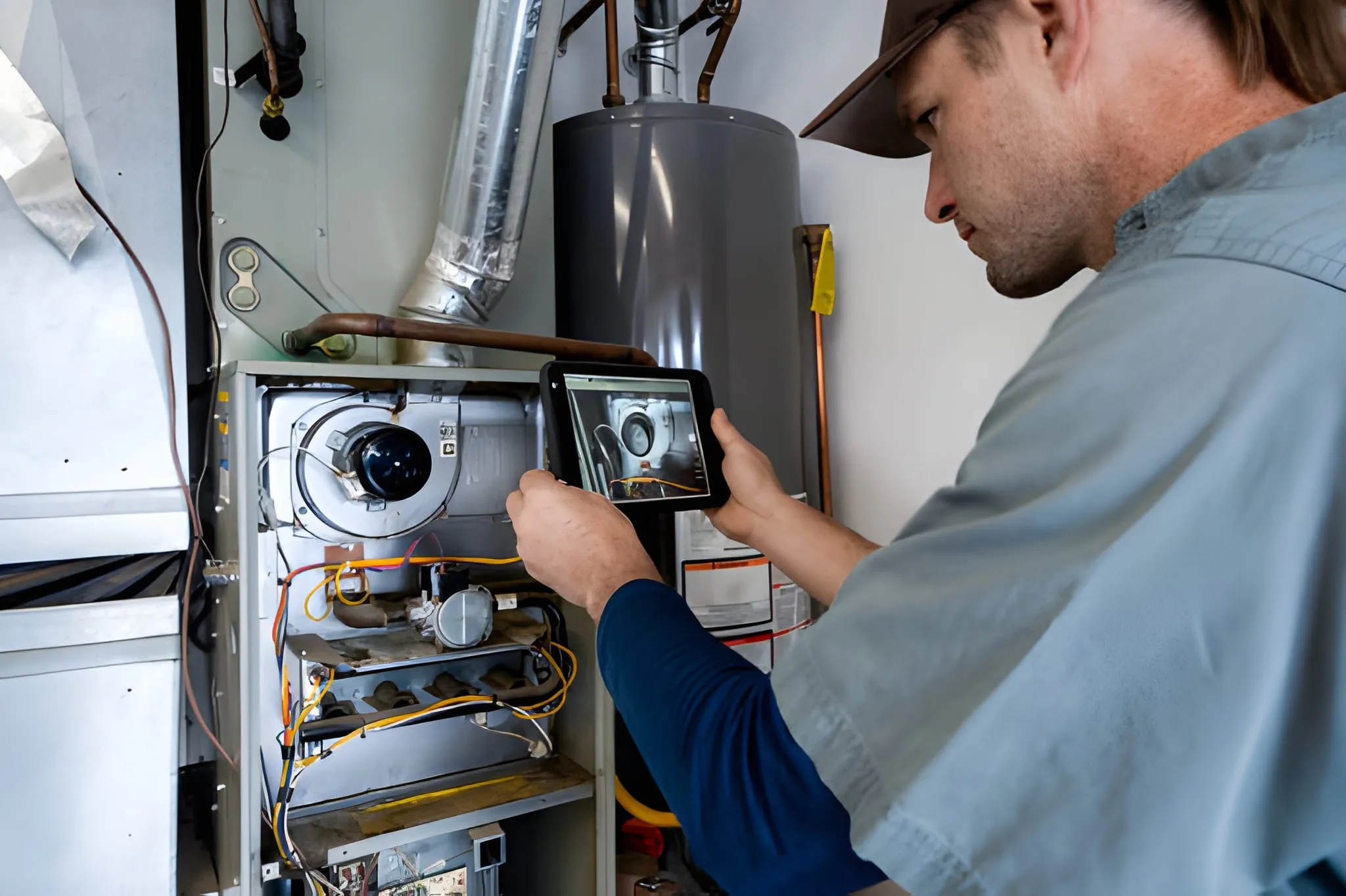
- Visual and mechanical inspection: Examine burners, flue, heat exchanger, wiring, filters, and condensate/drain systems for obvious issues.
- Operational tests: Start the furnace, observe ignition, flame pattern, blower operation, and cycling behavior.
- Component testing: Use meters to test thermostats, control boards, capacitors, motors, and safety switches.
- Airflow and combustion analysis: Measure airflow, static pressure and, when required, combustion efficiency to identify hidden problems.
- Transparent estimate: After diagnosis, technicians explain findings, recommended repairs, parts required, and expected outcomes.
- Repair and verification: Replace or repair parts, clear vents/filters, and retest the system for safe, efficient operation.
- Documentation and warranty provision: Provide a record of work performed, replaced parts, and applicable warranty details.
Parts, warranty coverage, and estimates
Replacement components may be OEM or high-quality aftermarket parts selected for compatibility and longevity. Most replacement parts carry a manufacturer’s warranty; service labor warranties are commonly provided for a defined period after the repair. Estimates are provided after a full diagnostic inspection so the homeowner can compare repair value against long-term needs and safety concerns.
When to repair versus replace
Consider these factors when deciding between repair and replacement:
- Age of the furnace: Furnaces typically last 15 to 20 years. Systems in the latter half of that range may be better candidates for replacement, especially if efficiency is low.
- Safety issues: A cracked heat exchanger or persistent combustion problems usually recommend replacement for safety.
- Frequency and cost of repairs: Repeated breakdowns or high repair bills relative to the value of a new unit favor replacement.
- Energy efficiency and utility costs: Newer furnaces are more efficient and can reduce monthly fuel bills enough to justify replacement over time.
- Availability of parts: Older models can be difficult or expensive to repair if parts are obsolete.
- Planned home timeline: If staying in the home long-term, investing in a new, efficient system has more upside.
A balanced evaluation looks at repair cost, expected remaining life, safety, and energy savings.
Benefits of timely repair and regular maintenance
- Improved safety: Early detection of combustion issues reduces carbon monoxide risk.
- Greater reliability: Fixing small problems prevents larger failures during cold weather.
- Better efficiency: Properly functioning systems use less fuel and maintain consistent comfort.
- Longer equipment life: Routine repairs and tune-ups extend service life and protect warranties.
Practical maintenance tips for Pasadena homeowners
- Change or clean filters regularly; clogged filters are the most common cause of airflow-related failures.
- Keep vents and returns clear and avoid blocking appliance access.
- Schedule an annual heating tune-up before the heating season to detect corrosion, loose connections, and combustion inefficiencies.
- Install and regularly test carbon monoxide alarms on every level of the home.
- Protect outdoor vents and condensate lines from icing and remove debris that can corrode components in coastal conditions.
- Seal and insulate ductwork where possible to reduce heat loss in older Pasadena houses.
FAQs
Q: How quickly can a technician respond in an emergency?
A: Emergency response is prioritized and often handled within a few hours on the same day; scheduled repairs are typically completed within 24 to 48 hours, subject to seasonal demand and parts availability.
Q: Is it worth repairing a furnace that is 15 years old?
A: It depends on repair cost, frequency of past repairs, safety issues (like a cracked heat exchanger), and efficiency goals. If repairs are frequent or costly and the unit is near the end of typical lifespan, replacement is often more cost-effective.
Q: Will technicians work on older or unusual furnace models?
A: Most licensed technicians service a wide range of makes and models; if specialized parts are required, availability can affect repair timing and options.
Q: What happens during a diagnostic visit?
A: The technician performs a safety inspection, checks combustion and airflow, tests electrical components, inspects mechanical parts, and provides a written explanation of findings and recommended repairs.
Q: Are replacement parts covered by warranty?
A: Replacement parts usually carry a manufacturer warranty; service labor often comes with a separate warranty for a defined period. Warranty specifics vary by part and provider.
Q: How can homeowners reduce the risk of sudden furnace failures?
A: Regular filter changes, annual professional tune-ups before winter, keeping vents clear, and monitoring carbon monoxide alarms significantly reduce the risk of unexpected failures and safety hazards.

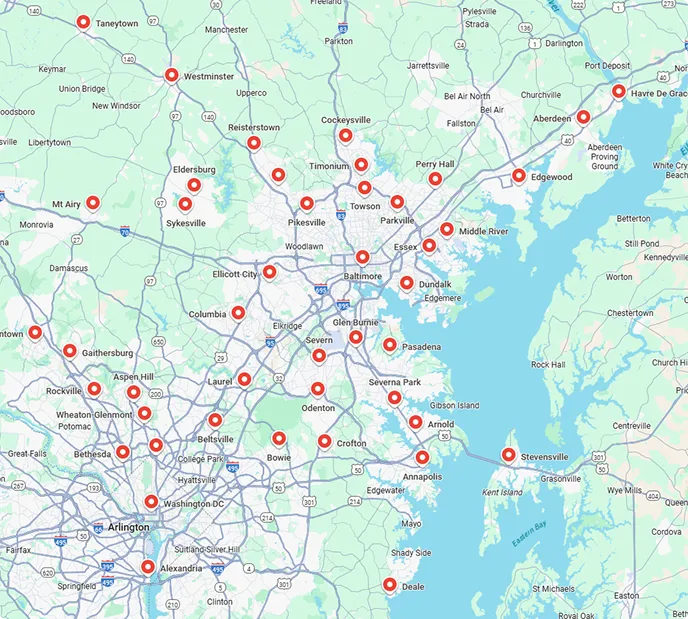
Service areas