

Heat Pump Replacement in Rockville, MD
Heat pump replacement in Rockville, MD with Tario HVAC offers year-round comfort, energy savings, and fewer repair costs when upgrading aging or inefficient systems. Tario HVAC covers on-site evaluations, accurate sizing, and selecting energy-efficient options (air-source, cold-climate, ductless, hybrid, and geothermal) to suit Maryland winters. We outline installation timelines, permitting, warranties, and post-install commissioning, plus expected savings of roughly 20-40% and provide guidance on financing, rebates, and maintenance to protect your investment. Our detailed steps include load calculations, ductwork checks, and equipment audits to ensure right sizing and comfort.
.webp)
Heat Pump Replacement in Rockville, MD
Replacing a worn or inefficient heat pump is one of the fastest ways to improve year‑round comfort, cut utility bills, and avoid repeated repair costs in Rockville, MD homes. With humid summers and cold winters, choosing the right heat pump and a precise installation matters here: undersized or poorly installed systems struggle with Montgomery County’s seasonal extremes, while properly selected, high‑efficiency equipment delivers consistent comfort and measurable energy savings.
Why Rockville homeowners replace heat pumps
Common reasons for replacement in this area include:
- System age: heat pumps older than 10–15 years lose efficiency and become unreliable.
- Rising repair frequency and cost: repeated compressor or refrigerant repairs often justify replacement.
- Comfort problems: uneven heating/cooling, short‑cycling, or inability to keep up during hot, humid summers or cold snaps.
- Obsolete refrigerant: older systems using R‑22 are costly to service due to phaseout.
- Desire for lower bills and electrification: homeowners aiming to reduce fossil fuel use often switch to modern cold‑climate heat pumps.
Comprehensive system evaluation and diagnostic steps
A responsible replacement starts with a thorough on‑site evaluation, including:
- Load calculation (Manual J): determines correct system size based on home square footage, insulation, window area, orientation, and occupancy.
- Ductwork assessment (Manual D): inspects leaks, sizing and airflow; leaky or undersized ducts often require repair or redesign.
- Electrical review: confirms service panel capacity and verifies proper breaker and wiring.
- Existing equipment audit: age, refrigerant type, previous repairs, and compressor health.
- Envelope check: insulation levels, air sealing, and moisture issues that affect heating/cooling load.
Accurate sizing is critical. Oversized heat pumps short‑cycle and reduce comfort; undersized units run constantly and still fail to meet set temperatures. Expect technicians to measure airflow, take temperature splits, and review thermostat compatibility during the evaluation.
Comparing energy‑efficient models and types
Common options for Rockville homes include:
- Air‑source heat pumps: traditional split systems suitable for most homes; efficient and cost‑effective.
- Cold‑climate heat pumps: engineered to deliver reliable heating at lower temperatures — a good choice for Maryland winters.
- Ductless mini‑split systems: ideal for homes without usable ducts, additions, or for room-by-room zoning.
- Hybrid (dual fuel) systems: pair a heat pump with a gas furnace to optimize efficiency across temperature ranges.
- Geothermal systems: extremely efficient long-term, but higher upfront investment and ground work required.
Key performance metrics:
- SEER (Seasonal Energy Efficiency Ratio) for cooling
- HSPF / HSPF2 for heating efficiency
- Variable‑speed or inverter compressors provide quieter operation, tighter temperature control, and the best efficiency in part‑load conditions prevalent in Rockville’s variable climate.
Cost estimates and financing / rebate options
Replacement cost varies with system type, size, and installation complexity. Typical ranges for Rockville:
- Standard air‑source heat pump replacement (like‑for‑like): approximately $5,000 to $12,000.
- High‑efficiency or cold‑climate models: $8,000 to $16,000.
- Multi‑zone ductless systems: $8,000 to $20,000 depending on zones.
- Geothermal systems: commonly $20,000 to $40,000+ (installation and ground loop costs drive price).
Actual price depends on ductwork work, electrical upgrades, permits, and chosen equipment. Many homeowners offset costs with incentives:
- Federal tax credits and state clean energy incentives (availability and qualifications change; registration and documentation usually required).
- Utility rebates or programs available through local providers serving Rockville, including Pepco and Maryland energy programs.
- Manufacturer rebates, local utility programs, and third‑party financing options — many homeowners use financing programs through lenders such as Wells Fargo or consumer financing platforms like Wisetack to spread payments.
Always verify current program eligibility and combine incentives when allowed to reduce net cost.
Professional removal, disposal, and permitting
Proper replacement includes safe removal and disposal of the old unit:
- EPA‑required refrigerant recovery to capture and reclaim or destroy refrigerant safely.
- Responsible recycling of metals and components to meet local environmental regulations.
- Pulling necessary permits and scheduling inspections as required by Montgomery County and the city of Rockville to ensure code compliance and maintain warranty validity.
Typical installation timeline
- Initial evaluation and estimate: 1 appointment (same day or within a few days).
- Equipment selection and ordering: 1–3 weeks depending on model availability.
- Permitting: often runs concurrently with ordering; timeframe depends on local permitting office.
- Installation: most single‑zone split systems are installed in 1–3 days; larger systems, ductwork modifications, or geothermal installs take longer.
- Commissioning and walkthrough: final checks, thermostat programming, and demonstration upon completion.
Warranty coverage and post‑installation performance
Warranties vary by manufacturer and installer:
- Manufacturer parts warranties commonly range from 5 to 10 years; compressors sometimes have separate longer warranties.
- Labor warranties are provided by installers and can vary; extended service agreements are often available.
- Warranty validity typically requires proper installation, permit documentation, and product registration with the manufacturer.
Post‑installation commissioning improves longevity and efficiency: accurate refrigerant charge, airflow balancing, and thermostat calibration ensure the unit performs as rated. Keeping records of the installation, model numbers, and permit documentation helps with future service and warranty claims.
Projected energy savings and expected benefits
Replacing an aging heat pump with a modern, high‑efficiency model typically yields:
- Energy savings commonly in the 20–40% range versus a 10–15+ year old unit, depending on climate, home envelope, and usage patterns.
- Improved year‑round comfort, quieter operation, and better humidity control during Rockville summers.
- Lower maintenance and repair costs, especially avoiding expensive refrigerant or compressor replacements.
- When paired with thermostat upgrades, zoning, and envelope improvements, total savings can increase further.
Maintenance and protecting your investment
To sustain energy savings and warranty coverage:
- Schedule annual or biannual tune‑ups for heating and cooling seasons.
- Replace filters regularly and keep outdoor units clear of debris and vegetation.
- Address duct leaks and insulation shortfalls identified during the evaluation.
- Register equipment with the manufacturer and retain service records.
Replacing a heat pump in Rockville, MD is an investment in comfort, resilience to seasonal weather, and long‑term energy savings. A thorough evaluation, correct sizing, selection of an appropriately rated unit (especially for cold‑climate performance), and professional installation make the difference between marginal improvement and reliable, efficient heating and cooling for years to come.

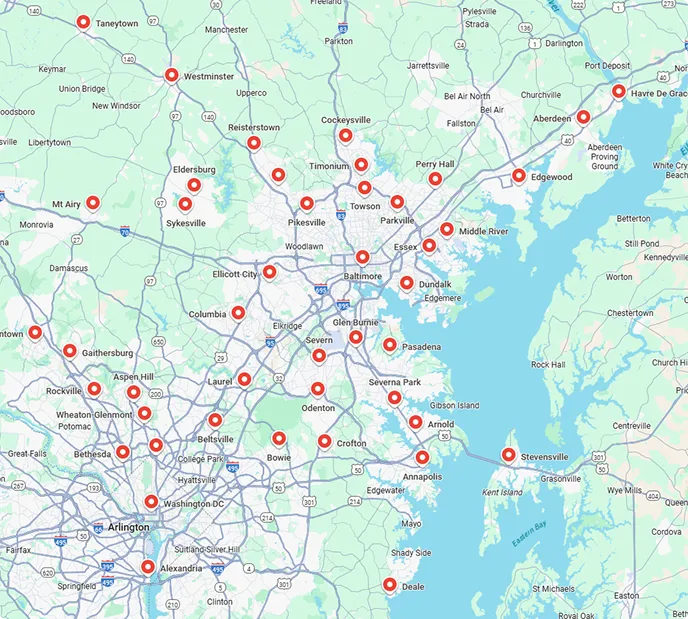
Service areas