

Heat Pump Repair in Sykesville, MD
Comprehensive heat pump repair guidance for Sykesville, MD homes, emphasizing prompt diagnostics, competitive restoration of heating and cooling performance, and strategies tailored to local climate and site conditions. The guide outlines common issues—no heating, short-cycling, refrigerant leaks, noisy operation, and uneven airflow—along with diagnostic steps, repair plans, parts replacement, and emergency options. It also covers estimating scope, warranties, preventative maintenance, and practical tips to extend system life and minimize future breakdowns in diverse Sykesville environments.
.webp)
Heat Pump Repair in Sykesville, MD
When a heat pump stops heating on a bitter winter morning or fails to cool during a humid Sykesville summer, the disruption is immediate and uncomfortable. Heat pump repair in Sykesville, MD focuses on restoring reliable, efficient operation while identifying root causes so the same problem does not return. Sykesville homes experience wide seasonal swings, heavy tree cover, and periodic road salt exposure in winter; those local factors influence common failures and the best repair strategies.
Why prompt heat pump repair matters in Sykesville
- Prevents higher energy bills from inefficient operation during hot, humid summers or cold snaps.
- Avoids secondary damage to compressors, reversing valves, and ductwork that can occur when problems are left unaddressed.
- Keeps indoor comfort and humidity control balanced for homes with tight building envelopes common in the region.Timely diagnosis reduces the chance of emergency replacement and preserves system lifespan.
Common heat pump issues in Sykesville and how they are diagnosed
Below are the typical problems homeowners search for when looking for heat pump repair in Sykesville, MD, and the diagnostic steps professionals take.
No heating or cooling
- Diagnostic steps: verify thermostat settings and power at the outdoor unit and indoor air handler; measure supply and return air temperatures; test reversing valve function and compressor operation; check for iced coils.
- Local considerations: Cold winter temperatures can cause defrost cycle failures; prolonged freezing or covered outdoor units from leaves or snow increase risk.
Short-cycling (system turns on and off frequently)
- Diagnostic steps: monitor run times, check refrigerant pressure, test capacitor and contactor performance, inspect thermostat placement and wiring.
- Common causes: low refrigerant, electrical component failure, oversized system, or thermostat issues often exacerbated by rapid indoor-outdoor temperature swings seen in Carroll County.
Refrigerant leaks
- Diagnostic steps: electronic leak detection, UV dye inspection, measure pressure and superheat/subcooling, identify leak location on coils, service ports, or fittings.
- Repair note: Leaks must be found and sealed before recharging. Road salt and corrosion on outdoor coil connections in roadside properties can accelerate leaks.
Noisy operation (clanking, hissing, grinding)
- Diagnostic steps: listen during startup and steady-state operation, inspect fan blades and motor, measure compressor amps, check reversing valve and expansion device for abnormal sounds.
- Causes: loose panels, failing motors, refrigerant flow issues, or worn compressor bearings. Tree debris, animal nests, and loose mounting in older homes are frequent contributors in Sykesville.
Poor airflow or uneven heating/cooling
- Diagnostic steps: inspect ductwork for leaks/insulation gaps, measure static pressure and airflow across the coil, assess blower motor function and return vents.
- Local factors: Basements and attics in older Sykesville homes may have unsealed ducts that reduce system capacity and comfort.
Typical repair solutions and parts replacement
Repair plans focus on fixing the underlying cause, restoring efficiency, and using OEM or equivalent-quality parts when replacements are required.
- Refrigerant leak repairs: locate and repair leak, evacuate system, replace failed sections or fittings, and recharge to manufacturer specifications while performing leak verification.
- Compressor service or replacement: when diagnosed as failing, compressors are replaced with matched-capacity units and system protection devices (hard-start kits, contactors) are inspected or replaced.
- Reversing valve, expansion device, or metering device replacement: necessary when cooling/heating modes or refrigerant flow are compromised.
- Fan motor, blower motor, capacitor, and contactor replacement: common electrical repairs that restore reliable operation and prevent short-cycling.
- Coil cleaning and fin repair: improves heat transfer and reduces strain on the system; outdoor coil cleaning is especially important after high pollen and leaf seasons.
- Duct sealing and airflow balancing: important for uneven comfort and efficiency improvements in older or renovated Sykesville homes.
Parts used in repairs are selected to match system specifications and local climate demands so units perform efficiently year-round.
Response times and emergency options
Heat pump repair in Sykesville typically follows tiers of service to address urgency:
- Emergency service protocols are available for loss of heating during extreme cold or when a system fault creates safety concerns; these situations are prioritized for same-day or after-hours response where possible.
- Urgent repairs (no cooling in heat waves, persistent refrigerant leaks, electrical hazards) are often scheduled within 24 hours.
- Non-emergency diagnostics and planned repairs are commonly handled within 48 to 72 hours depending on parts availability and seasonal demand.Scheduling is organized to minimize system downtime, with technicians bringing common diagnostic tools and replacement parts for rapid resolution.
Estimates and how work is scoped
Instead of fixed pricing, repair work is scoped based on inspection findings and system specifics:
- A proper estimate begins with a diagnostic visit that identifies failed components, any required parts, and labor time.
- Estimates usually include a breakdown of parts, labor, and any recommended preventive steps to avoid repeat issues.
- For older systems where multiple components are near end-of-life, the estimate may include an option for staged repairs versus full system replacement, explaining long-term cost and efficiency trade-offs.
Warranty and parts information
- Manufacturer warranties typically cover major components like compressors for a defined term; coverage varies by make and model.
- Aftermarket parts and labor often carry separate short-term warranties that cover workmanship and replaced components.
- Good repair practice includes documenting replaced parts and advising homeowners about manufacturer registration and warranty transfer where applicable.
- In Sykesville, corrosion and weather exposure can affect warranty claims; preserving service records and performing seasonal maintenance helps support any future warranty issues.
Preventing future breakdowns in Sykesville homes
Regular maintenance is the most effective way to reduce repair needs:
- Schedule annual or biannual tune-ups to check refrigerant charge, clean coils, test defrost cycles, and verify electrical components.
- Replace filters regularly and keep outdoor units clear of leaves, snow, and debris; trimming vegetation improves airflow around the condenser.
- Insulate and seal ductwork in attics and crawlspaces to prevent energy loss and reduce system runtime.
- Consider smart thermostats and zoning controls to reduce cycling and improve comfort during the region's variable weather.
- Monitor for small signs like longer run times, higher energy bills, or subtle noises and address them early to avoid major failures.
Timely, professional heat pump repair in Sykesville, MD restores comfort and efficiency while addressing local environmental challenges. Proper diagnosis, quality parts, documented repairs, and regular maintenance extend system life and reduce risk of future emergency failures.

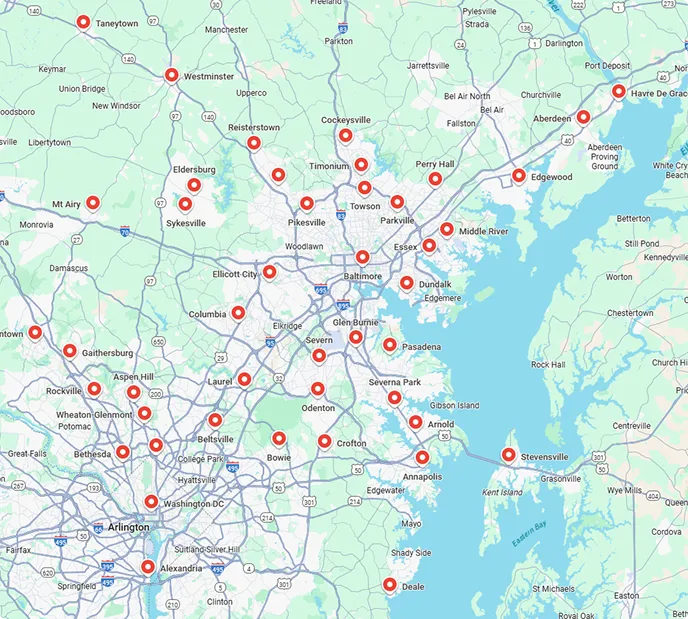
Service areas