



Heat Pump Repair in Severna Park, MD
A heat pump symptoms in Severna Park, MD, and outlines what a professional diagnostic on-site involves. It details typical repair options, parts replacement, and expected timelines, with emphasis on safety and coastal climate considerations. It also covers emergency after-hours care, warranty and parts information, and factors that influence repair versus replacement decisions. Practical maintenance tips help prevent future breakdowns, while final guidance reinforces documentation, transparency, and long-term efficiency for local homeowners.
Heat Pump Repair in Severna Park, MD
A reliable heat pump keeps your Severna Park home comfortable year-round, handling humid summers and chilly Chesapeake-region winters with efficiency. When a heat pump fails or underperforms, it can quickly disrupt comfort and raise utility bills.
Why prompt heat pump repair matters in Severna Park
Severna Park’s coastal climate brings high humidity, salt air exposure, and temperature swings between seasons. Those conditions increase stress on outdoor units and refrigerant systems and can accelerate corrosion on coils, electrical connections, and fasteners. Leaving issues unresolved can produce:
- Higher energy bills from reduced efficiency
- Accelerated component failure (compressor, fan motors)
- Moisture-related problems such as icing or poor dehumidification
- Comfort disruption during cold snaps or heat waves
Common heat pump symptoms in Severna Park homes
Watch for these frequent signs that a heat pump needs professional attention:
- No heat in heating mode or insufficient cooling in summer
- Short cycling (system turns on and off frequently)
- Unusual noises: grinding, banging, hissing, or rattling
- Weak airflow from vents or uneven temperature between rooms
- Unit freezing up outdoors or excessive frost buildup
- Rapidly rising electricity usage without a change in comfort
- Thermostat not responding or incorrect temperature readings
Typical diagnostic process: what to expect on-site
A thorough on-site diagnosis isolates the cause so repairs address the root problem rather than symptoms:
- Visual inspection of outdoor and indoor units for corrosion, debris, damaged fins, and drainage problems.
- Airflow checks at supply and return vents and inspection of filters and ductwork.
- Electrical tests: checking voltage, capacitors, contactors, and safety switches.
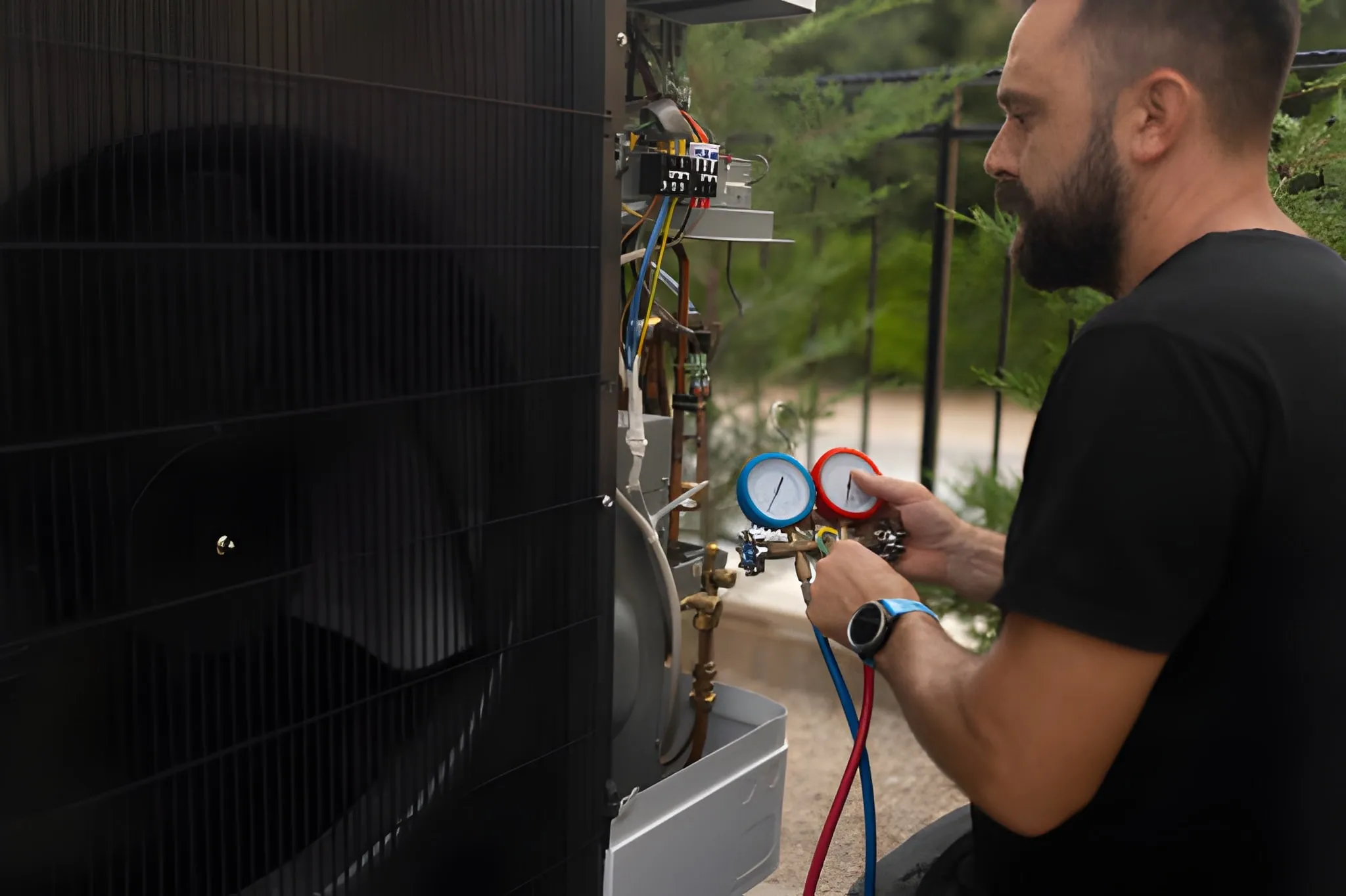
- Refrigerant evaluation: measuring pressures and temperatures to identify leaks or improper charge.
- Compressor and reversing valve function tests to confirm mechanical operation.
- Thermostat calibration and control signal verification.
- Digital documentation of findings and recommended repair options.
Technicians prioritize safety and often perform temporary measures to restore operation during colder weather (e.g., reversing valve or thermostat adjustments) while scheduling permanent repairs.
Common repairs and parts replacement options
Repairs vary by symptom and system age. Typical services include:
- Refrigerant leak repair and recharge — locating and repairing leak points, then restoring proper charge
- Compressor replacement or repair — for failed or failing compressors (major repair)
- Capacitor and contactor replacement — frequent causes of start-up issues and short cycling
- Reversing valve and defrost control repair — solves icing and defrosting failures
- Fan motor or blower motor replacement — restores airflow and proper heat exchange
- Thermostat replacement or smart thermostat integration — improves control and diagnostics
- Coil cleaning and corrosion treatment — vital in coastal environments to restore efficiency
- Ductwork and filter adjustments — resolves airflow restrictions and improves comfort
Many repairs use OEM parts for long-term reliability. In some cases, high-quality aftermarket parts are appropriate; technicians will explain options and expected longevity.
Estimated repair timelines
Timelines depend on diagnosis, part availability, and the extent of work needed. Typical ranges:
- Minor repairs and adjustments (capacitor, contactor, thermostat, filter/coil clean): 1–3 hours, often same-day.
- Refrigerant leak repair and recharge: 2–6 hours, depending on leak location and repair complexity.
- Major component replacement (compressor, reversing valve): 4–8 hours on-site once parts are available; parts lead time may add days.
- Complex system rebuilds or older unit replacements may require scheduling and multi-day coordination.
Technicians serving Severna Park often stock common wear items to reduce wait times, but rare components or specialty compressors may require ordering.
Emergency response and after-hours care
Heat pump failures in freezing weather present safety and comfort risks. Emergency response options are typically available for no-heat or hazardous electrical situations. Emergency visits focus on restoring safe basic operation and preventing further damage until permanent repairs can be completed.
Warranty and parts information
Warranty details vary by manufacturer and part:
- Manufacturer warranties often cover compressors and major components for several years; some newer systems include extended coverage on key parts.
- Labor warranties are separate and may be provided by the service provider for a fixed period after repair.
- Using OEM parts generally preserves manufacturer warranties; aftermarket parts may affect coverage.
- Always confirm warranty transfers and remaining coverage before proceeding with major repairs.
Technicians should provide documentation of replaced parts and any associated warranties for your records.
Factors that influence repair decisions
When choosing a repair path, consider:
- Age of the heat pump and remaining expected life
- Cost and availability of replacement parts
- Energy efficiency differences between repairing and replacing
- Frequency and history of past breakdowns
- Local climate impacts and corrosion risk in Severna Park
A transparent diagnostic report helps weigh short-term repairs against possible replacement when ongoing reliability or efficiency is a concern.
Tips to avoid future breakdowns in Severna Park
Preventive care reduces emergency repairs and extends equipment life:
- Schedule seasonal tune-ups (spring for cooling, fall for heating) to inspect, clean, and calibrate systems.
- Replace or clean filters every 1–3 months depending on occupancy and indoor air quality.
- Keep the outdoor unit clear of leaves, grass, salt spray, and debris—trim vegetation at least 2–3 feet from the cabinet.
- Protect outdoor equipment from salt corrosion where applicable; rinse coils occasionally if near coastal zones.
- Ensure proper drainage around the outdoor unit and clear condensate lines to prevent water damage and icing.
- Install a thermostat with programmable or adaptive settings to reduce short cycling.
- Consider a whole-home maintenance plan or seasonal checklist to catch small issues before they become major repairs.
For Severna Park homeowners, timely, well-documented heat pump repair preserves comfort, safety, and efficiency given the area’s humidity and coastal influences. A thorough diagnostic, transparent repair options that weigh part longevity and warranty implications, and a preventive maintenance routine are key to dependable performance and long-term savings.

Service areas
