

Heat Pump Installation in Towson, MD
Towson residents looking for heat pump installation can expect a comprehensive process from Tario HVAC, from the initial consultation right through to ongoing maintenance. We'll walk you through site assessments, crucial load calculations, and help you choose the best equipment options—whether it's air-source, ductless, cold-climate, or hybrid systems—all designed to meet your efficiency goals. We'll explain important sizing considerations, electrical and refrigerant requirements, and our step-by-step installation sequence. This is followed by thorough commissioning and a user orientation. Tario HVAC also addresses common local installation issues, offers robust maintenance plans, provides clear warranty information, and highlights the long-term value of a properly designed system for your home.
.webp)
Heat Pump Installation in Towson, MD
Switching to a modern heat pump is one of the most effective ways to improve year-round comfort and energy efficiency in Towson, MD homes. This page outlines the complete new heat pump installation process so you know what to expect: from the initial consultation and site assessment to equipment selection, electrical and refrigerant work, commissioning, and ongoing maintenance. It also covers common installation issues in Towson and how proper design prevents them.
Why a heat pump makes sense in Towson, MD
Towson experiences hot, humid summers and cool winters. Modern air-source and cold-climate heat pumps deliver efficient cooling in summer and reliable heating through much of the heating season, often replacing or supplementing a furnace. Benefits for local homeowners include:
- Consistent year-round comfort with one system for heating and cooling
- Lower operating costs compared with electric resistance and often competitive with gas depending on efficiency and fuel prices
- Better dehumidification during hot months, improving indoor air quality
- Eligibility for local utility rebates and state incentives in many cases when installed to specification
Initial consultation and site assessment
A proper installation begins with an on-site consultation to confirm needs and constraints. Key items covered:
- Home size and layout, insulation and window orientation
- Existing ductwork condition and airflow capacity
- Electrical service available at the panel and whether upgrades are needed
- Preferred equipment type (air-source vs ductless) and placement options
- Goals for efficiency, noise, and aesthetics
Technicians perform a load calculation (Manual J) to determine the correct heating and cooling capacity. This prevents common problems from incorrect sizing and ensures the system can meet Towson’s seasonal demands.
Equipment selection: air-source, ductless, and cold-climate options
Choosing the right heat pump depends on your home, budget, and efficiency goals. Options include:
- Air-source heat pumps: Common choice for homes with existing ductwork. Look for high SEER and HSPF ratings and variable-speed inverter compressors for best efficiency.
- Ductless mini-split systems: Ideal for homes without ducts or for zone control in additions and finished basements. Multiple indoor heads offer targeted comfort.
- Cold-climate heat pumps: Designed to maintain capacity at lower outdoor temperatures; useful in colder Towson winters or for homes aiming to minimize backup heat use.
- Hybrid systems: Pair a heat pump with a gas furnace for optimal efficiency across temperature ranges.
When selecting a model, consider long-term efficiency (SEER/HSPF or HSPF2/COP), noise ratings, compressor type, warranty terms, and compatibility with smart thermostats.
Sizing and efficiency considerations
Proper sizing balances capacity and efficiency:
- Undersizing leads to long run times, poor humidity control, and potential comfort gaps on the coldest or hottest days.
- Oversizing causes short cycling, reduced efficiency, and increased wear.Certified load calculations and duct assessments determine the right tonnage and required airflow (CFM) to match the home.
Pay attention to system efficiency and expected seasonal performance statistics. In Towson’s mixed climate, prioritizing higher heating efficiency (HSPF) and variable-speed operation often yields the best real-world savings.
Electrical and refrigerant work
Installation involves licensed electrical and refrigerant handling work:
- Electrical: Confirm circuit breaker sizing, run dedicated lines, install disconnects and surge protection if needed, and ensure the service panel handles the new load.
- Refrigerant: Proper line set routing, brazing to manufacturer specifications, evacuation to remove moisture and air, and precise refrigerant charging are essential. Technicians must perform leak checks and follow EPA regulations for refrigerant handling.
Any required electrical panel upgrades or permit work should be identified during the site assessment and handled to code.
Installation steps and safety checks
A typical installation follows a coordinated sequence:
- Prepare mounting pad or brackets for the outdoor unit with proper clearance and vibration isolation.
- Install indoor unit(s) or connect to ductwork. For ducted systems, inspect and modify ducts to ensure correct static pressure and sealing.
- Route and connect refrigerant lines, condensate drains, and electrical wiring.
- Insulate line sets and secure all penetrations to prevent air and moisture intrusion.
- Evacuate the system, charge refrigerant per manufacturer requirements, and perform leak testing.
- Run safety checks: verify wiring torque, breaker and disconnect operation, condensate drainage, and outdoor unit level and anchoring.
- Confirm refrigerant pressures and temperatures are within specified ranges.
All technicians should use manufacturer checklists and local code inspection requirements.
System commissioning and user orientation
Commissioning validates performance:
- Measure airflow, temperature rise/drop, and obtain pressure and electrical readings.
- Adjust system controls, set charge and airflow, and run the unit in heating and cooling modes.
- Demonstrate thermostat operations, scheduling, emergency modes, and defrost cycles.
- Explain auxiliary heat, setback strategies, and basic troubleshooting items for homeowners.
A thorough walk-through ensures you understand how the system operates and what to expect seasonally in Towson.
Common installation issues in Towson and how to avoid them
- Improper sizing: Prevented by professional load calculations.
- Poor ductwork: Leaky or undersized ducts reduce efficiency; duct testing and sealing are recommended.
- Electrical limitations: Older homes may need panel upgrades before installation.
- Incorrect refrigerant charge: Only certified technicians with proper tools should perform charging.
- Inadequate outdoor unit clearance: Leaves, snow, and nearby obstructions degrade performance — proper siting is crucial.
Addressing these during planning avoids performance and reliability problems later.
Maintenance plans and warranty information
Regular maintenance keeps heat pumps efficient and reliable. Typical maintenance plans include:
- Seasonal tune-ups before cooling and heating seasons
- Filter checks and replacement guidance
- Coil cleaning, drain inspection, and refrigerant pressure checks
- Priority service scheduling and discounted diagnostic rates
Manufacturer warranties commonly cover compressors and major components for fixed terms; labor warranties vary by installer. Registering your equipment, keeping maintenance records, and following recommended service intervals protect warranty coverage and extend system life.
A professionally designed and installed heat pump delivers consistent comfort, lower energy bills, and reduced carbon footprint. In Towson, choosing the right equipment and committing to seasonal maintenance ensures dependable operation through humid summers and cool winters. Proper installation, accurate sizing, and regular service are the keys to reliable, efficient heating and cooling for years to come.

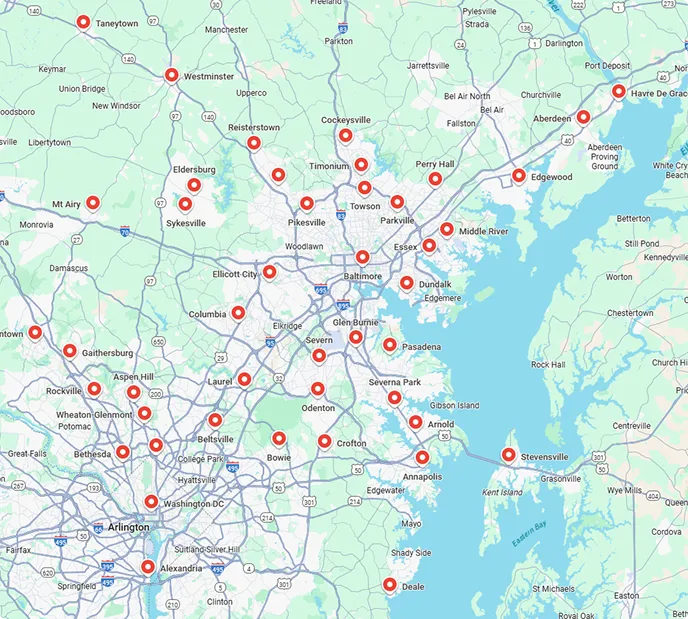
Service areas