

Heat Pump Installation in Odenton, MD
Tario HVAC provides professional heat pump installation in Odenton, MD, from initial consultation through commissioning and ongoing maintenance. Prospective homeowners will learn why heat pumps suit Odenton's climate, how system sizing using Manual J ensures comfort and efficiency, and what to expect during site preparation, ductwork considerations, refrigerant and electrical work, and mounting. We cover thermostat integration, zoning, and warranty documentation, along with post-installation tune-ups and maintenance routines designed to maximize performance, reduce energy use, and extend equipment life.
Heat Pump Installation in Odenton, MD
Upgrading to a modern heat pump is one of the most effective ways to improve year‑round comfort and reduce energy costs in Odenton, MD. Heat pumps provide efficient heating in winter and reliable cooling in summer, and when properly sized and installed they deliver consistent performance, quieter operation, and long service life. This page explains what to expect from a professional heat pump installation in Odenton, MD — from the initial consultation and system selection through commissioning, thermostat integration, warranties, and recommended maintenance.
Why a heat pump makes sense for Odenton homes
Odenton experiences humid summers and cool to occasionally freezing winters. Modern cold‑climate heat pumps maintain efficiency at lower temperatures and can often replace or supplement an existing furnace or central AC. Benefits tailored to Odenton include:
- Year‑round efficiency: high HSPF and SEER ratings reduce energy use during humid summers and cold snaps.
- Lower emissions and simpler maintenance compared with combustion heating.
- Flexible options for homes with limited ductwork (ductless mini‑splits) or older ducts that need minimal modification.
- Compatibility with smart thermostats and zoning to manage comfort across multiple living areas.
Types of systems and how to choose
During system selection, installers will recommend one of the main heat pump options based on your home’s layout, insulation, and comfort needs:
- Split systems: outdoor compressor with indoor air handler, compatible with existing ductwork.
- Packaged systems: all components in one outdoor unit, commonly used where indoor space is limited.
- Ductless mini‑split systems: perfect for additions, garages, sunrooms, or homes without ducts; allow room‑by‑room control.Each option has tradeoffs in efficiency, installation complexity, and upfront cost. In Odenton, cold‑climate models and systems with efficient defrost cycles are especially valuable.
Initial consultation and accurate system sizing
A thorough consultation is the foundation of a successful installation. Expect these steps:
- Home evaluation: inspection of existing heating/cooling equipment, ductwork condition, attic and wall insulation, windows, and air leakage.
- Load calculation: a Manual J heat loss/gain calculation determines the precise heating and cooling capacity your home needs. This protects against oversized or undersized equipment.
- Recommendations: discussion of system type, efficiency ratings (SEER/HSPF), indoor unit placement, and necessary ductwork or refrigerant line installations.Accurate sizing improves comfort, reduces short cycling, and maximizes efficiency — especially important with Odenton’s temperature swings.
Site preparation and installation procedures
Professional installations follow a defined workflow that minimizes disruption:
- Site preparation: selecting a location for the outdoor unit that allows proper airflow, minimizes noise to neighbors, and keeps the unit above possible snow/ice accumulation. Indoor unit locations are selected for balanced airflow and aesthetic considerations.
- Structural and duct work: any necessary reinforcements, pad installation, duct sealing, or small sheet metal modifications are completed before equipment arrival.
- Refrigerant and electrical work: correct refrigerant line lengths, proper insulation, and dedicated electrical circuits matched to the manufacturer’s specifications are installed.
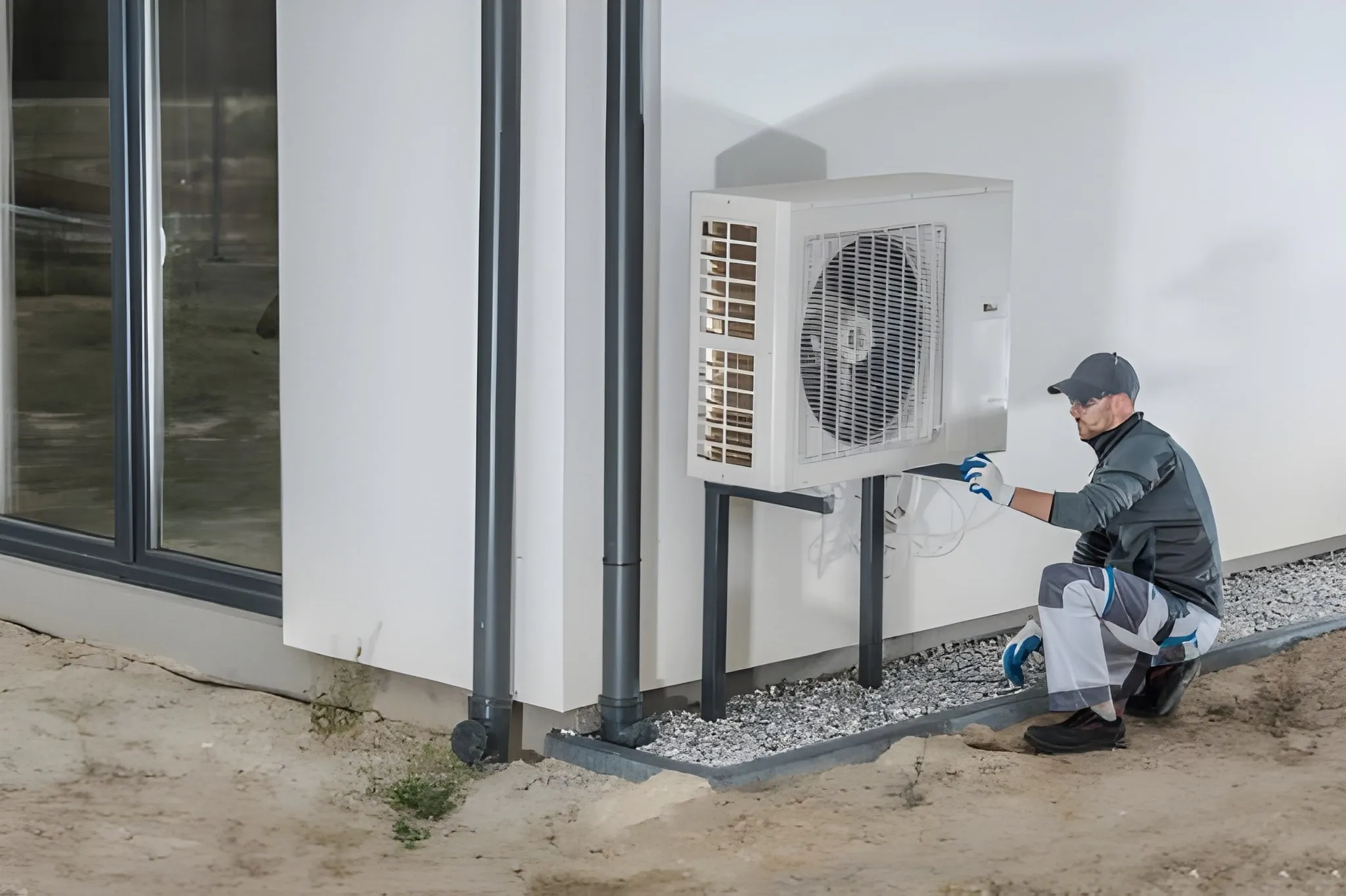
- Mounting and connections: technicians set the outdoor unit, install indoor air handlers or wall-mounted heads, run refrigerant lines and condensate drains, and complete electrical hookups.Expect installers to protect floors and landscaping and to follow permit requirements as dictated by local codes.
Commissioning and performance testing
A professional installation includes rigorous commissioning to confirm the system performs to spec:
- Refrigerant charge verification using superheat/subcooling measurements to ensure correct refrigerant levels.
- Airflow and static pressure checks to verify adequate distribution and identify duct issues.
- Electrical load testing to confirm components draw expected amperage and safety devices operate correctly.
- Temperature split and runtime monitoring to validate heating/cooling capacity.
- Defrost cycle testing on cold‑climate models and verification of reversing valve operation.Commissioning documents often record initial settings, measured values, and recommended adjustments for optimal operation.
Thermostat integration and controls
Thermostat selection and setup are critical for comfort and efficiency:
- Compatibility: ensure the thermostat supports heat pump controls, including staging, auxiliary/backup heat, and defrost logic.
- Smart thermostats: Wi‑Fi models offer scheduling, geofencing, and remote diagnostics, and can improve seasonal energy savings when configured correctly.
- Zoning: multiple thermostats or dampers allow independent control of different living areas for greater comfort and lower running costs.Proper configuration prevents excessive use of auxiliary heat and optimizes heat pump operation for Odenton’s typical temperature patterns.
Manufacturer warranties and documentation
Understand warranty coverage before installation:
- Compressor and parts warranties vary by manufacturer; many compressors carry extended warranties when systems are registered.
- Labor warranties are separate and may be provided by the installer; confirm coverage duration and what is included.
- Keep all installation documentation, commissioning records, and maintenance receipts — these often affect warranty eligibility.Registration and following the recommended maintenance schedule help protect warranty claims and system longevity.
Post‑installation maintenance recommendations
To preserve efficiency and reliability, follow a regular maintenance plan:
- Filter changes: replace or clean filters every 1–3 months depending on use and indoor air quality.
- Annual tune‑ups: at minimum, schedule a professional inspection before peak heating and peak cooling seasons to check refrigerant, electrical connections, and system controls.
- Condenser care: keep outdoor units clear of debris, maintain 2–3 feet of clearance, and remove snow buildup promptly.
- Duct maintenance: inspect and seal ducts every few years to minimize losses in older Odenton homes.Consistent maintenance reduces emergency repairs, prolongs equipment life, and helps maintain manufacturer warranties.
Common installation questions for Odenton homeowners
- Will a heat pump heat during very cold weather? Modern cold‑climate heat pumps maintain good output into lower temperatures; a hybrid dual‑fuel setup (heat pump plus furnace) can provide backup during extreme cold.
- How noisy are outdoor units? Newer models are much quieter; proper mounting and strategic placement further reduce perceived noise, an important consideration in Odenton neighborhoods.
- Are there incentives or rebates? Local utilities and state programs sometimes offer rebates or incentives for high‑efficiency heat pumps; check current programs when planning installation.
Heat pump installation in Odenton, MD is a technical process that yields significant long‑term benefits when performed with accurate sizing, careful site preparation, thorough commissioning, and ongoing maintenance. Prioritizing these steps ensures reliable comfort, efficient operation, and lasting value for your home.

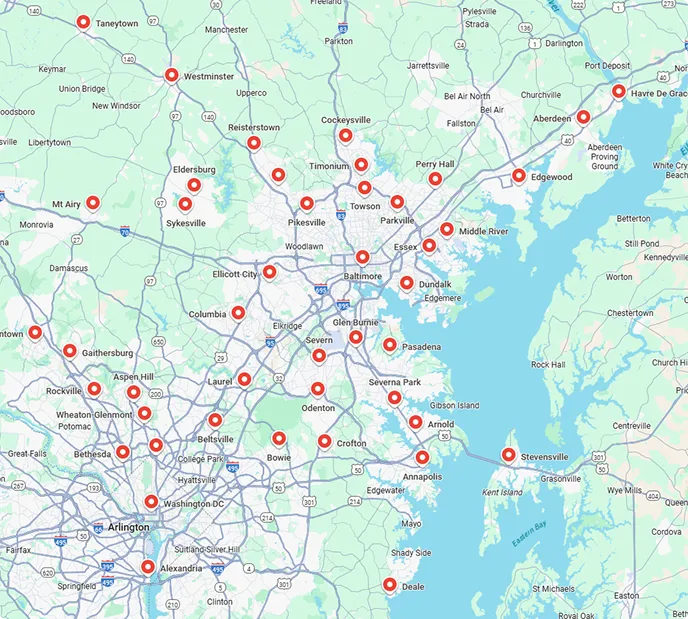
Service areas