

Heat Pump Installation in Ellicott City, MD
For heat pump installation in Ellicott City, MD, Tario HVAC provides a detailed, step-by-step process from initial site assessment to startup, including meticulous sizing and evaluation. We cover various system options, such as air-source, ductless, multi-zone, and hybrids, and address local challenges often found in historic homes. Our team handles all permitting and licensing requirements with Howard County, and conducts essential testing for optimal performance and humidity control. Furthermore, we explain warranties, financing options, provide training on your new system, and offer maintenance plans designed to maximize energy savings and long-term comfort. With Tario HVAC, you'll learn how proper sizing is crucial for reducing short cycling and enhancing system longevity.
.webp)
Heat Pump Installation in Ellicott City, MD
Installing a new heat pump is one of the most effective ways to improve year round comfort and reduce energy costs in Ellicott City, MD. With hot, humid summers and chilly winters, a properly sized and installed heat pump delivers efficient cooling and reliable heating while taking advantage of modern inverter-driven compressors and cold-climate performance.
Why choose a heat pump for Ellicott City homes
- Heat pumps provide both heating and cooling in one system, reducing the need for separate furnace and AC equipment in many homes.
- Modern cold-climate heat pumps hold useful capacity at lower temperatures, making them practical through Howard County winters.
- High seasonal efficiency in cooling addresses Ellicott City’s humid summers and helps lower energy bills compared with older systems.
- Ductless mini split options are ideal for historic homes, additions, or zones where ductwork is impractical.
Common heat pump installation types we cover
- Air-source heat pumps (standard split systems) for homes with existing ductwork.
- Ductless mini split systems for additions, finished basements, sunrooms, or historic houses without ducts.
- Multi-zone systems for multi-level homes that need independent temperature control by room.
- Hybrid systems that pair a heat pump with a gas furnace in homes wanting backup heat at the coldest outdoor temperatures.
Typical local challenges in Ellicott City
- Older homes with limited or leaky ductwork require careful evaluation; duct sealing or a ductless solution may be the best route.
- Humidity control is important during July and August; system selection and correctly sized equipment help avoid short cycling and high indoor humidity.
- Shaded yards, steep lots, and historic district restrictions can affect outdoor unit placement and permit requirements.
- Cold snaps mean installers should specify equipment with reliable low-temperature performance and ensure proper defrost controls and refrigerant charge.
Site assessment and professional system sizing
A successful installation begins with a detailed site assessment and load calculation (Manual J). The assessment includes:
- Inspecting insulation levels, window types, and air leakage to determine actual heating and cooling loads.
- Measuring existing ductwork for sizing and airflow limitations.
- Evaluating outdoor unit placement for airflow, noise, and snow or runoff exposure.
- Recommending air-source vs ductless systems based on layout, budget, and performance goals.
Correct sizing avoids short cycling, humidity problems, and premature wear. Properly sized inverter-driven units will ramp capacity to match demand, increasing comfort and efficiency.
Step-by-step installation process
- Pre-install planning and permit pull - Verify permit requirements with Howard County and prepare required paperwork.
- Equipment staging - Deliver indoor and outdoor units, line sets, mounting brackets, and electrical components.
- Duct work or indoor unit installation - For split systems connect to existing ducts with proper transitions and sealing. For ductless, mount wall or ceiling cassettes in optimal zones.
- Refrigerant line and drain installation - Run insulated refrigerant lines and condensate drains to the outdoor unit, minimizing bends and distance.
- Electrical connections - Install dedicated circuit, disconnect, and safely connect controls and communication wiring.
- System evacuation and refrigerant charge - Vacuum the refrigerant lines, measure vacuum level, and charge to manufacturer specs if necessary.
- Start up and controls setup - Configure the thermostat or remote controllers, enable inverter staging, and set defrost and balance controls.
- Final inspection and permit sign off - Schedule required inspections and provide documentation for permit closure.
Efficiency and performance testing
After installation, the system is tested and tuned to ensure peak performance:
- Measure airflow to each register or indoor unit and compare against target CFM.
- Verify refrigerant charge and pressures for optimum heat transfer.
- Confirm proper electrical draw and that starting currents are within spec.
- Run heating and cooling cycles to check temperature split, defrost operation, and compressor staging.
- Evaluate whole-house humidity and make recommendations for dehumidification if needed.
These tests protect equipment longevity and deliver the expected efficiency gains in Ellicott City’s climate.
Permits, local licensing, and regulations
New heat pump installations typically require building permits from Howard County. Work should be performed by a licensed Maryland HVACR contractor who understands local code requirements, inspection processes, and permit submission. Proper permitting ensures installations meet electrical, refrigerant handling, and safety standards and helps preserve home resale value.
Homeowner training and handover
A thorough handover includes:
- Walkthrough of how to operate thermostats, timers, and mobile apps where applicable.
- Demonstration of routine maintenance tasks such as filter changes, condensate trap checks, and outdoor unit clearance.
- Explanation of expected seasonal performance, defrost operation, and what to watch for that may indicate service is needed.
Empowering homeowners with this knowledge reduces service calls and ensures the system runs efficiently.
Warranty, maintenance plans, and financing
- Manufacturer warranties typically cover compressors and parts for a defined period; installers often provide a workmanship warranty for their labor.
- Regular maintenance plans help maintain efficiency and extend equipment life through annual cleanings, filter checks, and refrigerant/pressure inspections.
- Financing options are commonly available to spread upfront costs; common partners in the region include national lenders and point-of-sale financing platforms. Financing makes higher-efficiency systems and multi-zone installations more accessible.
Benefits summary and long-term value
A professionally sized and installed heat pump delivers dependable year round comfort, better humidity control during Ellicott City summers, and strong heating performance through moderate Maryland winters. Choosing the right system—air-source or ductless—based on a site assessment, paired with proper permitting, performance testing, and planned maintenance, maximizes efficiency, preserves equipment life, and protects your investment in home comfort.
If you live in Ellicott City, the combination of local climate considerations, older building stock, and modern equipment options makes a tailored heat pump installation an effective path to long-term comfort and energy savings.

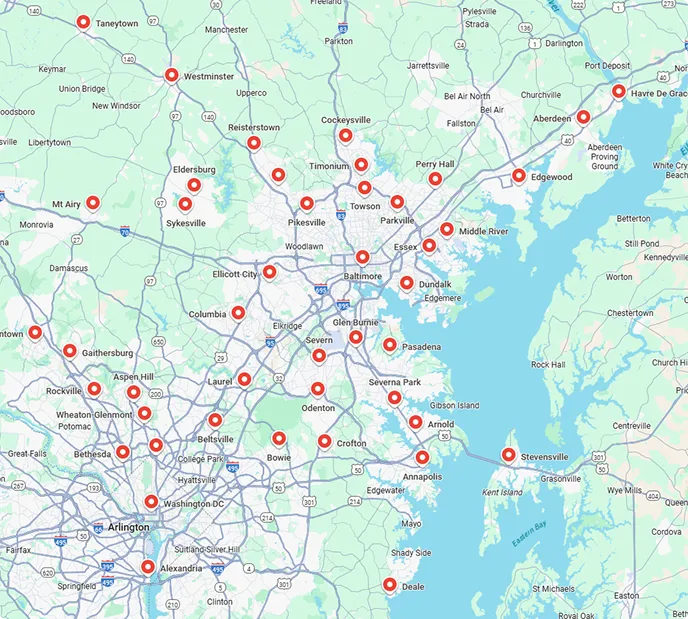
Service areas